FOR DALLAS–FORT WORTH SCHOOL SYSTEMS
School Door Monitoring in Dallas–Fort Worth
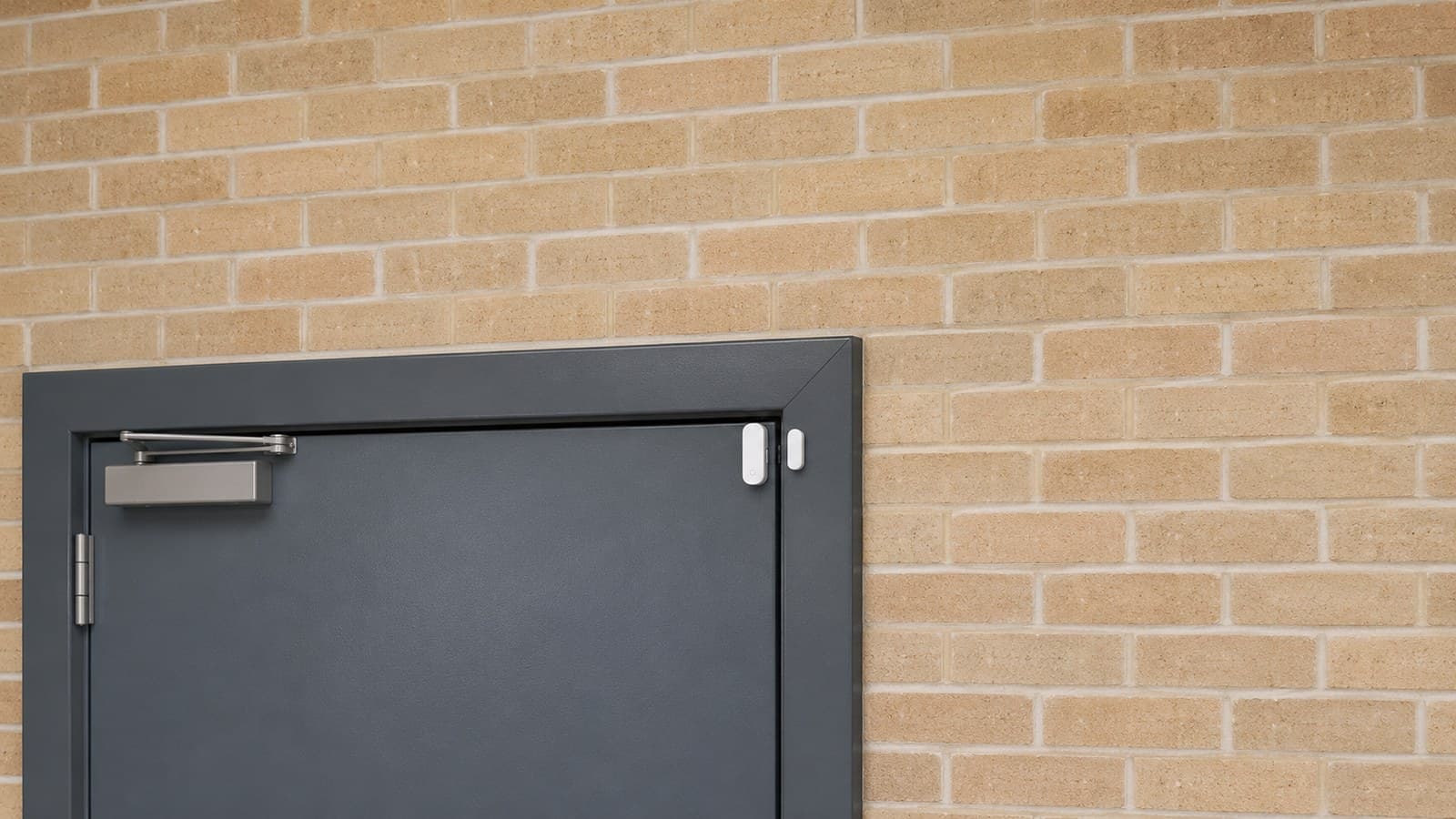
Positive Proof provides door monitoring for school systems across Dallas–Fort Worth. A wireless sensor goes on each door. When a door is propped, held or left open past the limit you set, the people you choose hear about it at once, by two-way radio, text, email or dispatch. Nothing is hardwired and nothing is drilled into the building.
Your required inspections check every exterior door of your instructional facilities at least weekly during school hours. Door monitoring covers the hours in between, and tells your staff a door is open when it happens, not at the next inspection.
WHAT YOU GET
What Dallas–Fort Worth schools get with Positive Proof door monitoring
Positive Proof Door Monitoring puts a wireless sensor on each exterior door. The sensors mount to standard doors with no hardwiring and no drilling, and they are off the district network.
A rule for every door.
Each door gets its own rules by building, time of day and calendar day: alert when it opens, when it closes, or only when it stays open past the limit you set. Thirty seconds on a stairwell door, longer on a door that sees deliveries.
Alerts to the right people.
Alerts go to the people you choose for each door, and can go to different people after hours, by text, email, two-way radio or dispatch. One door can reach the front office, another the resource officer.
The door, named.
The alert names the door and its floor-plan location. Every event is saved with its time, building and door.
Sound at the door, where you want it.
There are audible options: a stop-sign style door alarm, or an alarm with a strobe. They can go on all doors or only selected ones, and silent routed alerts are included on every monitored door.
Deliveries and faults.
Authorized staff can pause door alerts for a delivery, and alerts resume automatically. Equipment fault and offline notifications go to whoever you choose.
One dashboard.
Door events and panic alerts report to one dashboard.
WHAT A SENSOR DOES NOT DO
What a door sensor does not do
A sensor proves a door is closed, not that it is latched or locked, so your weekly hardware check stays. What door monitoring adds is sensor-verified evidence attached to your existing weekly log. It does not replace the log.
In the Texas rule, "actively monitored" means "supervised by an adult who can visibly review visitors prior to entrance, who can take immediate action to close and/or lock the door, and whose duties allow for sufficient attention to monitoring" (the rule's own definition). A door alarm can tell that adult a door needs attention, but it does not make the door actively monitored.
WITH ACCESS CONTROL
If your campuses already have access control
If your campuses have access control from a local integrator, the two systems do different jobs. Access control governs who is allowed through a credentialed door. Door monitoring tells you whether any exterior door is open or closed, right now. Access control can alert on a held or forced door only where that door has a door position sensor and the alert is set up. A door without one cannot report being propped.
The Partner Alliance for Safer Schools (PASS) published the sixth edition of its K-12 guidelines in 2023. That edition says every exterior door should be electronically monitored for whether it is open or closed. Door monitoring covers every door access control cannot reach. Monitoring does not replace your locks, and it is not trying to. Our door monitoring vs access control comparison sets the two side by side.
WHO HEARS IT
Who hears a door alert, and how staff call for help
A door alert reaches people who are not standing at the door: a resource officer's two-way radio, the front office by email or text, and dispatch, at the same moment if you choose. The same platform carries our staff panic badge: a press alerts the front office, administration and the resource officer, with the exact location it was pressed, and panic alerts and door events report to the same dashboard. For the state's panic alert duty, see our Texas Alyssa's Law page. Visitor logs are accessible through the same login: Positive Proof Visitor Management.
STATEWIDE AND REGIONAL
Statewide door rules, regional audits
Texas sets its school door duties statewide. Under the Texas Administrative Code's school safety rule, every exterior door of a school system's instructional facilities must be set to a closed, latched and locked status, with narrow exceptions. Each school system's board must also adopt a policy requiring at least weekly inspections, during school hours, of all exterior doors of all instructional facilities. The rule is §103.1215 of the Texas Administrative Code, effective September 1, 2026. Our Texas school door security requirements page sets out which rule applies and what satisfying the standing requirement involves.
What is regional is who audits your campuses. Texas Education Code §37.1084 has a school safety review team in each education service center region conduct on-site intruder detection audits of school district campuses every year. The region's education service center supports that team. Region 10, with offices in Richardson, says it serves over 130 ISDs, charters and private schools across 10 north Texas counties. Region 11, which describes itself as "centrally located west of Fort Worth," lists 76 school districts and 17 charter schools across 10 counties.
The Fort Worth-area center describes the intruder detection audits as "completed by ESC employed inspectors" in three phases, one of them an "Exterior Door Audit and Weekly Door Sweep Documentation Review" phase. The Richardson center lists the current three-year safety and security audit cycle for independent school districts as September 1, 2026 through August 31, 2029. Our Texas intruder detection audit guide covers what the audit checks and what a finding means.
What findings looked like here. CBS News Texas reported on the North Texas intruder audits on March 31, 2023, six months into the program. It reported that inspectors found the schools' exterior doors closed and locked more than 95% of the time. At one out of every seven North Texas schools checked, inspectors noted an issue that required a corrective action. The findings districts described included "not having the weekly door sweep log readily available for an inspector" and a door "closing too slowly", in the station's account.
OTHER FACILITIES
Other facilities across Dallas–Fort Worth
Door monitoring is not only for schools. The same sensors, rules and routed alerts serve healthcare, government, corporate and the other industries we work with, wherever a propped back door is a risk. Tell us about your building when you request a demo.
QUESTIONS
Questions Dallas–Fort Worth districts ask
Start with your doors
If you are deciding how your exterior doors should alert, and who should hear it, we can talk through your campuses and doors with you. Request a demo and tell us your district or organization, how many campuses or buildings you have, and how many exterior doors.
Request a demo