Home → Industries → Corporate

Workplace Violence Prevention for Corporate Offices and Campuses

California SB 553 requires a documented Workplace Violence Prevention Plan from nearly every employer. Positive Proof gives corporate security teams staff duress alerts, real-time door monitoring, and visitor screening in one platform — no app required, 2-second response.

Request a Demo
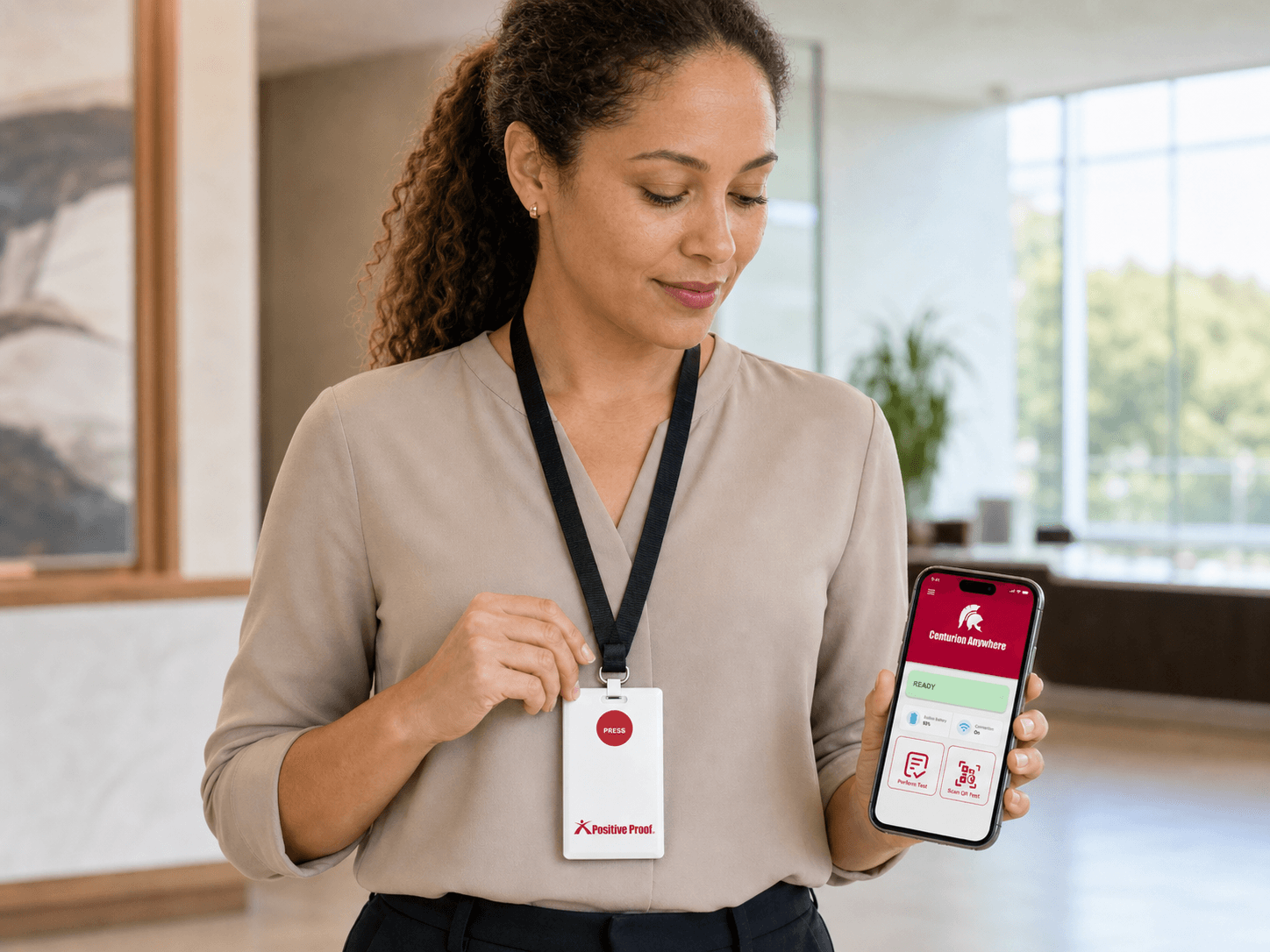
Corporate office panic button system — Positive Proof staff duress alerts and workplace violence prevention for office buildings

THE CORPORATE ENVIRONMENT

Office Buildings Were Not Designed With Workplace Violence Prevention in Mind

Workplace violence is now a documented liability for every employer in the United States. The Bureau of Labor Statistics recorded 470 workplace homicides in 2024 — a trajectory that has risen steadily since 2020. Beyond fatal incidents, the OSHA General Duty Clause requires every employer to address recognized hazards, and state legislatures are moving faster than federal guidance. California SB 553, effective July 1, 2024, mandates a written Workplace Violence Prevention Plan for virtually all California employers — with documented hazard assessment, response procedures, and incident logging. The question for corporate security directors is no longer whether a prevention system is needed. It is whether the one in place can be documented and defended.

Most corporate panic button systems fail because they depend on a smartphone. Corporate employees leave phones at workstations, in charging docks, or in bags across the room. A staff duress system that requires unlocking a phone before activating delivers protection in theory but not in practice. Peer reviews of app-dependent systems consistently report the same finding: adoption drops sharply when the solution adds friction. Security directors evaluating duress systems specifically ask whether the device can be worn on an ID badge and activated with one press — without touching a phone, without a Wi-Fi connection, without IT involvement.

Multi-floor office buildings create a precision gap that GPS alone cannot close. Corporate campuses and high-rise office environments require floor-level and room-level location accuracy when a duress alert fires. A GPS coordinate is indeterminate between floors — a responding security officer needs to know whether the alert came from the fourth-floor conference room or the parking level. Positive Proof's facility-deployed network delivers that precision, operating on an independent network that functions in stairwells, basements, and areas where Wi-Fi and cellular coverage are unreliable.

Multi-floor buildings, after-hours lone workers, and contractor-heavy environments create continuous staff safety challenges throughout the workday

OSHA General Duty Clause and California SB 553 require documented workplace violence prevention programs — with evidence of hazard assessment and response systems

Corporate security directors increasingly require vendor-agnostic duress systems that operate independently of Wi-Fi, cellular, and smartphone apps

WHAT'S AT STAKE

The Gaps That Expose Corporate Organizations to Harm and Liability

Four scenarios that corporate security directors, HR leaders, and facilities managers work to prevent — and the compliance exposure that makes inaction increasingly costly.

Threatening Former Employee

A terminated employee returns to the building. The receptionist has no silent alerting mechanism — calling 911 from the desk phone is visible and escalates the confrontation. Security on another floor has no real-time location data when they respond.

Lone Worker After Hours

A facilities technician working alone in a mechanical room or a property manager doing a building walkafter hours faces a medical emergency or a threat. Their phone is in their jacket across the room. The nearest colleague is three floors away.

Executive Duress Situation

An executive in a private meeting faces an escalating confrontation with a vendor or visitor. Activating a phone-based app requires visible motion and a delay. A wearable device on a badge allows discreet, immediate activation without alerting the aggressor.

OSHA Compliance Gap

Following a workplace violence incident, an OSHA inspector requests evidence of the written prevention plan, staff training records, and documented alert system capability. No system was in place. The employer faces citations and civil exposure from the lack of documented reasonable care.

Contractor Access Breach

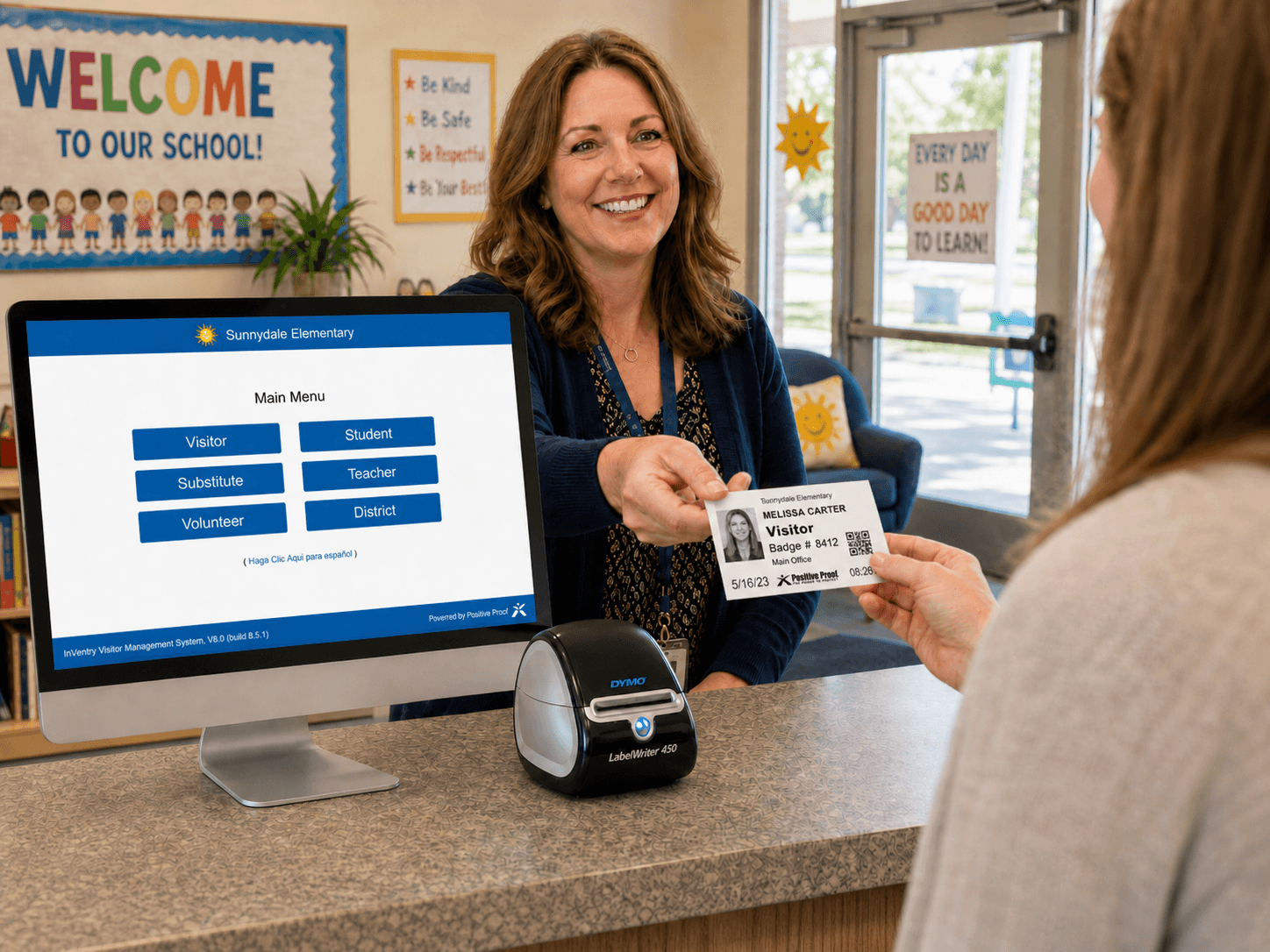
A contractor from an unfamiliar vendor is waved through the lobby without screening. No record exists of who entered the building or when they departed. A later incident reveals the individual had a disqualifying background that a visitor management check would have flagged.

POSITIVE PROOF FOR CORPORATE

Three Solutions Built for Corporate Office Environments

One platform protects corporate staff with wearable duress alerts, monitors every access point in real time, and screens every contractor and visitor before they reach your workforce.

What Positive Proof Delivers for Corporate Security

Four outcome areas that matter most to corporate security directors, HR leaders, and facilities teams.

Security Improvement

  • Floor-level precision via the facility-deployed network
  • Coverage in stairwells, parking levels, and Wi-Fi dead zones
  • Wearable badge device — proven across 25+ years of K-12 deployment, no app required
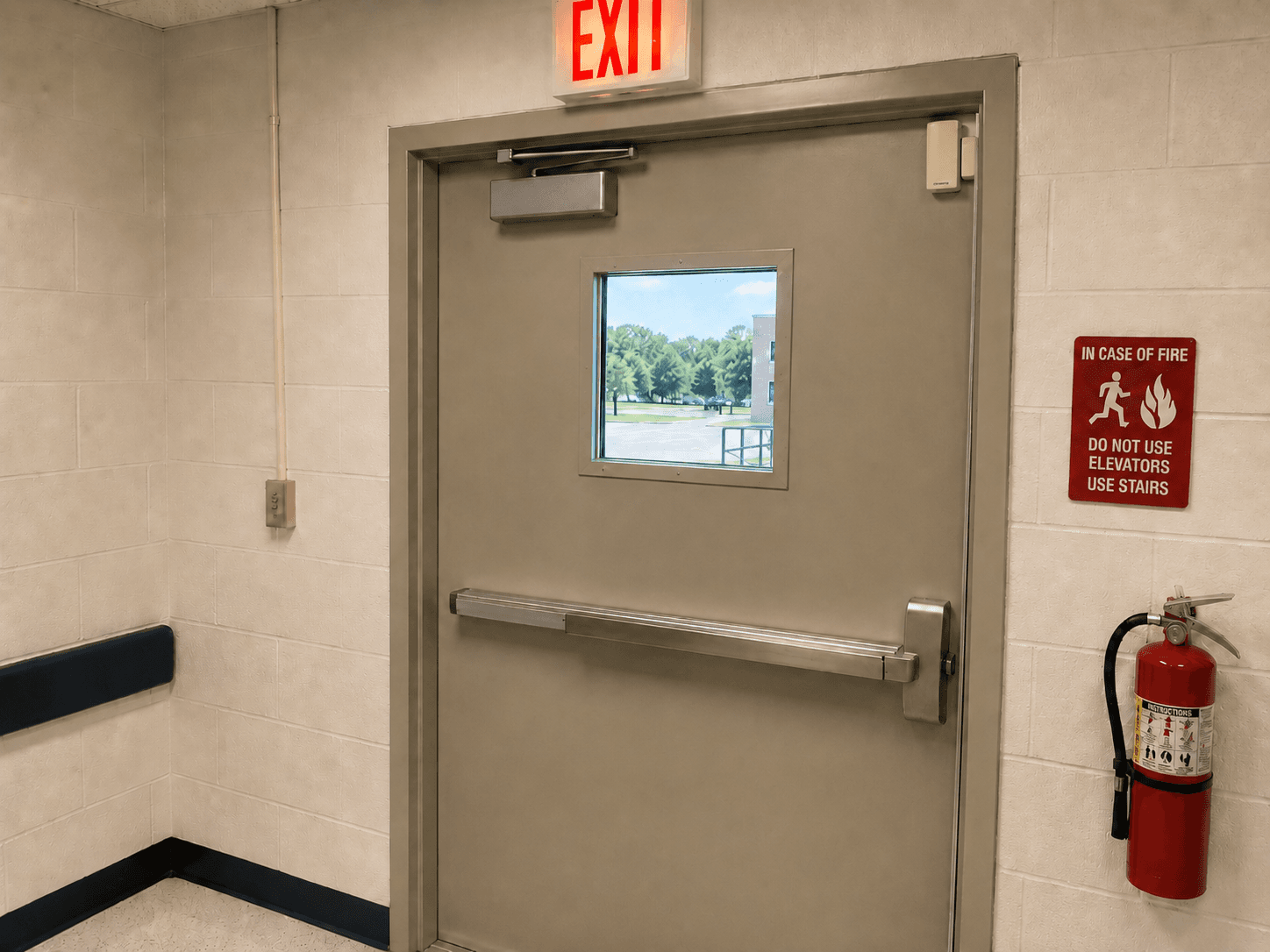
  • Real-time door status across all access points and floors

Operational Efficiency

  • Automated contractor and visitor check-in — no manual logs
  • Centralized dashboard for multi-building corporate campuses
  • Operates independently of corporate Wi-Fi and IT infrastructure
  • Wire-free installation with minimal disruption to building operations

Compliance Protection

  • CA SB 553 Workplace Violence Prevention Plan documentation support
  • OSHA General Duty Clause incident prevention evidence trail
  • Duty of care documentation for every duress activation
  • State workplace violence mandate compliance across multi-state portfolios

Reporting & Visibility

  • Timestamped duress alert log for every staff activation
  • Contractor and visitor access records with entry and exit timestamps
  • Exportable incident documentation for legal and HR proceedings
  • Unified dashboard combining alert history, door events, and visitor records

2 Sec

Alert-to-Responder Time

25+

Years in Security

96–98%

Staff Report Feeling Safer After Deployment

See How Positive Proof Protects Corporate Staff in Your Building

A 30-minute demo is configured to your building type, existing security infrastructure, and state compliance requirements.

Request a Demo

Common Questions About Corporate Panic Button Systems

What security directors, HR leaders, and facilities managers ask before evaluating staff duress systems.

California SB 553, effective July 1, 2024, requires virtually all California employers to establish a written Workplace Violence Prevention Plan — including documented hazard assessments, response procedures, employee training, and a violent incident log. The law does not mandate a specific device like a panic button, but a documented staff alerting system is direct evidence of a functioning prevention program. Employers without a documented system face legal exposure when an incident occurs. Positive Proof provides the alert log, incident history, and response documentation that supports a defensible SB 553 compliance record.
"Panic button" and "staff duress system" describe the same core function — a device that allows an employee to discreetly signal for help during a threatening situation. Security professionals typically use "duress system" because it reflects the operational framing of workplace violence as an OSHA and duty-of-care compliance issue. Both terms appear in procurement conversations. For OSHA General Duty Clause purposes, the relevant requirement is that the employer has a documented system that allows staff to communicate an emergency — wearable duress buttons worn on ID badges satisfy that requirement.
Positive Proof's wearable staff duress device operates on a facility-deployed network — completely separate from corporate Wi-Fi, cellular service, or any smartphone. Staff wear the device on their ID badge. A single press sends a location-stamped alert to security personnel within 2 seconds. The alert identifies the floor and room where the activation occurred. No phone unlock, no app launch, no Wi-Fi dependency. Cellular backup (LTE/5G) provides a second independent path for parking areas and outdoor locations. The system continues operating during IT maintenance windows, Wi-Fi outages, and power disruptions within the battery backup window.
Yes. GPS-based panic systems cannot reliably distinguish between floors in a multi-story building — a GPS coordinate is indeterminate vertically. Positive Proof uses the facility-deployed network to provide floor-level and room-level location precision throughout a multi-story building. When a staff member activates a duress device, the alert identifies the specific floor and zone where the activation occurred — giving security responders the exact information they need to reach the staff member quickly. The system covers stairwells, elevator lobbies, parking levels, and any area where Wi-Fi and cellular signals are unreliable.
Visitor and contractor access is a documented workplace violence vector — incidents involving unauthorized or misidentified visitors account for a meaningful share of corporate workplace violence events. Positive Proof's visitor management module screens every contractor, vendor, and visitor at check-in against custom watchlists and access rules, creates a timestamped record of every entry and exit, and provides real-time visibility of who is currently in the building. Combined with staff duress alerts and door monitoring, this gives corporate security directors a complete picture of building access — before, during, and after any incident.
Yes. Positive Proof integrates with most commercial access control systems, camera networks, and security platforms via API and webhook. Staff duress alerts, door monitoring events, and visitor records feed into existing security operations infrastructure without replacing current systems. The platform deploys as an infrastructure-layer overlay — it adds precision alerting and visitor screening to your existing setup rather than requiring a full security replacement. If a specific integration is not already built, Positive Proof develops it as part of the deployment process. Deployment does not require changes to your existing corporate network or IT infrastructure.

Ready to Protect Every Employee in Your Building?

One provider for staff duress alerts, door monitoring, and contractor screening.

Request a Demo