Home → Industries → Government

Panic Button for Government Buildings and Courthouse Staff

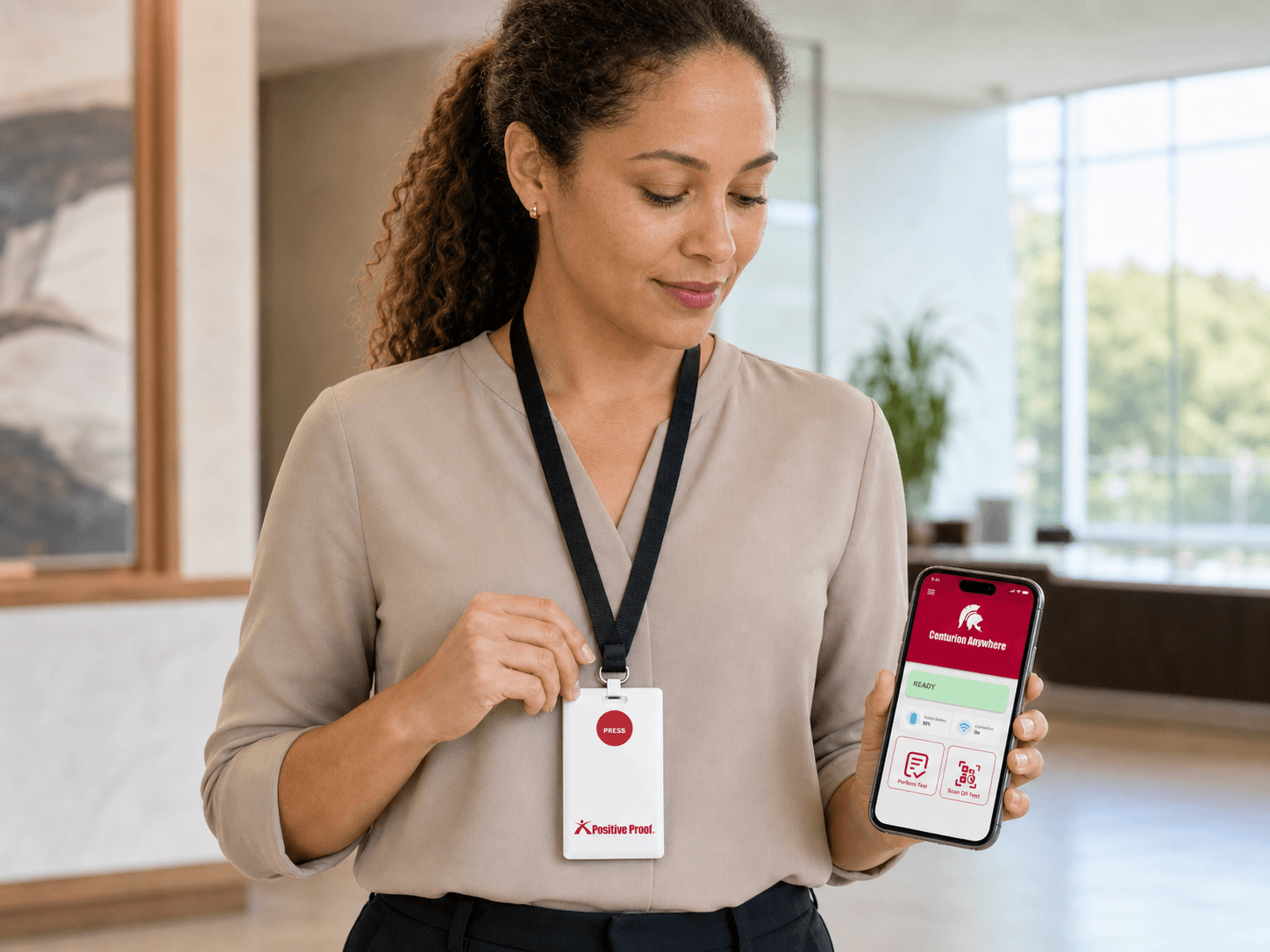
Government facilities — from federal courthouses to municipal offices — place staff in direct contact with the public in high-stakes, often adversarial environments. Positive Proof delivers wearable staff duress alarms that operate on a facility-deployed network, reaching responders in 2 seconds with no Wi-Fi or smartphone required.

Request a Demo
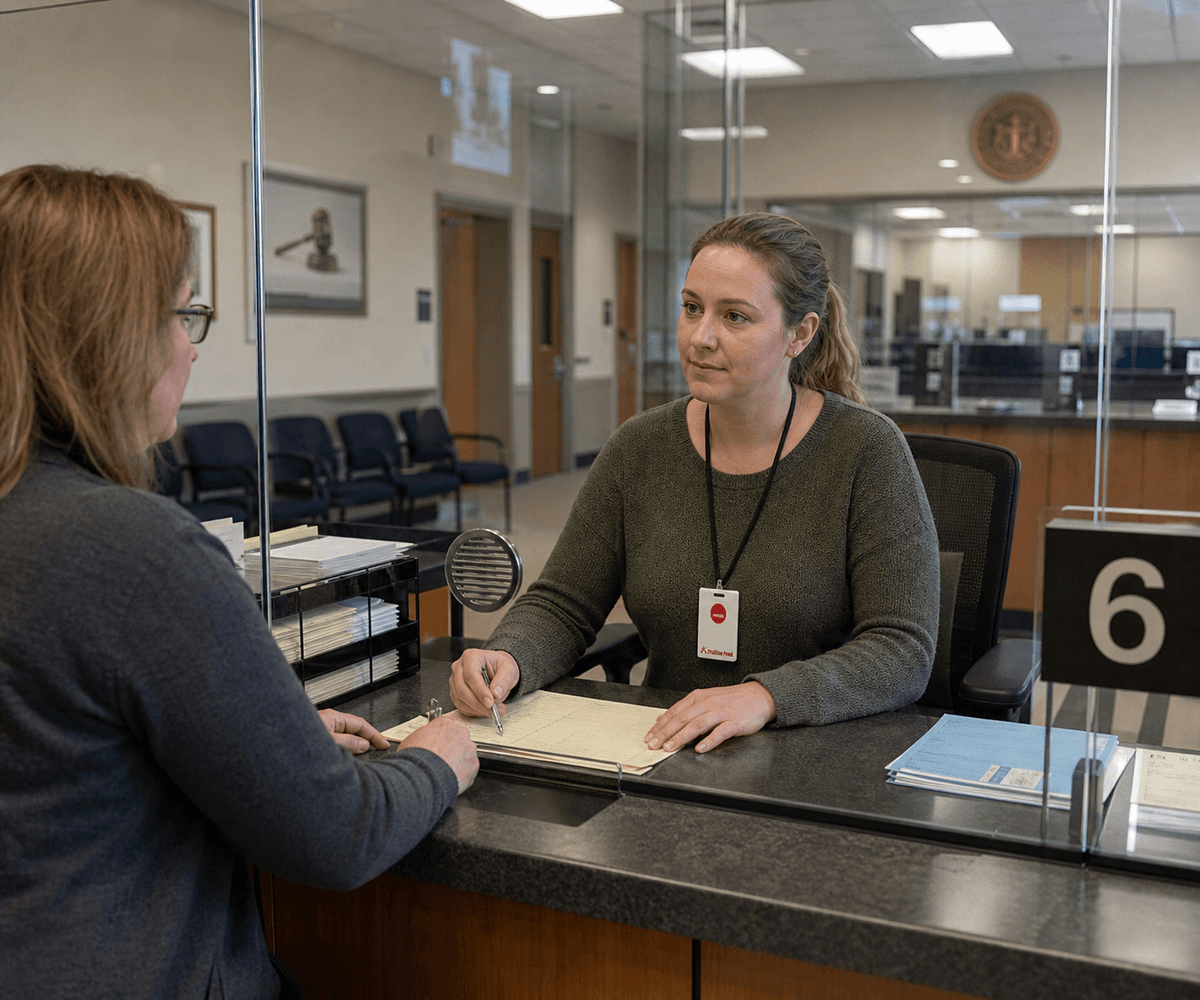
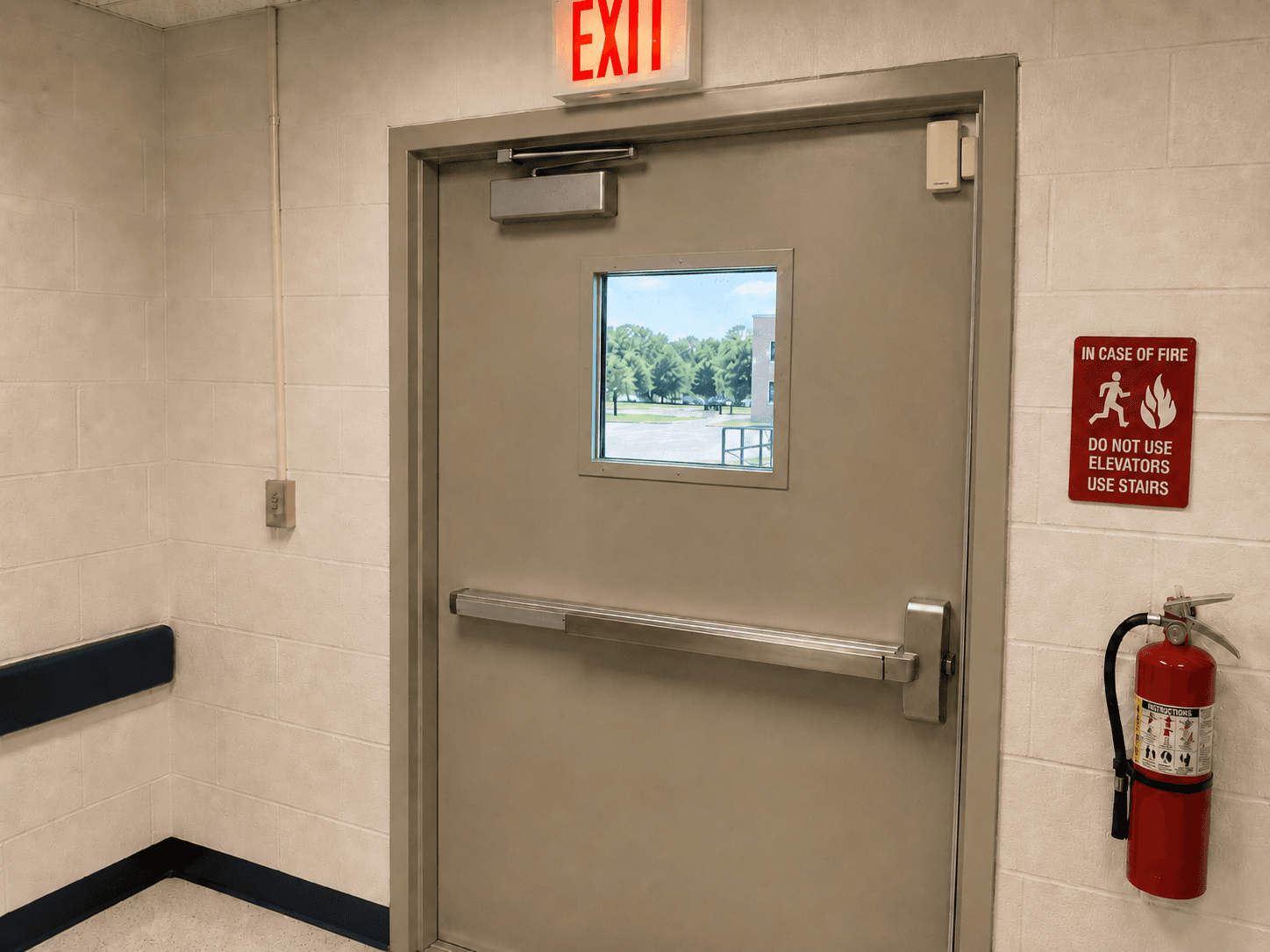
Panic button for government buildings — Positive Proof staff duress alarm and door monitoring system for courthouses and municipal facilities

THE GOVERNMENT ENVIRONMENT

Government Staff Face Threat Every Day — In Buildings Not Built for Modern Safety Systems

Courtrooms, probation offices, DMV counters, permit desks, and social services interview rooms share a common risk: staff interact daily with members of the public in adversarial or high-stress situations. Defendants facing sentencing, citizens denied licenses, clients in crisis — these interactions escalate with little warning. Most government buildings were not designed with staff duress systems in mind, and the patchwork of wall-mounted call buttons and radio protocols that exist today depends on staff being near a fixed device when an incident occurs.

The physical infrastructure of government buildings compounds the problem. Federal courthouses, county buildings, and older municipal offices are dense masonry and concrete construction — basements, secure holding areas, judges' chambers, and probation interview rooms are deliberately isolated spaces where Wi-Fi coverage is unreliable and cellular signals are weak. Safety systems that depend on Wi-Fi or a smartphone are not dependable in these environments. A bailiff in a holding area or a clerk in a courthouse basement needs coverage that works independent of the building's network infrastructure.

The regulatory pressure is real and growing. The ISC Risk Management Process (2024 edition) — the operative framework for all federal civilian facilities — explicitly requires duress alarm systems as a countermeasure for facilities rated Facility Security Level III and above. Federal Protective Service assessments of GSA-managed buildings use FSL determination to mandate specific security countermeasures. State courts and municipal buildings face parallel standards at the state level. Facilities that cannot document a compliant staff alerting system face increasing exposure during security reviews and post-incident audits.

Public-facing operations run all day — court sessions, DMV lines, permit counters, and probation check-ins creating continuous, unpredictable risk for front-line staff

Facility Security Level III and above requires documented duress alarm systems under the ISC Risk Management Process — federal facilities without a compliant system face audit exposure

Dense concrete and masonry construction in older government buildings blocks Wi-Fi and cellular signals in exactly the spaces staff need protection most — holding areas, interview rooms, and secure corridors

WHAT'S AT STAKE

The Scenarios Government Safety Directors Work to Prevent

These scenarios happen in government facilities across the country — and the response window is measured in seconds, not minutes.

Courtroom Escalation

A defendant reacts violently during sentencing. The clerk cannot reach a wall-mounted device. The bailiff is on the opposite side of the room. Every second before a silent duress activation reaches the marshal's office puts staff at risk.

Probation Office Threat

A caseworker conducting a routine check-in interview is threatened by a client with a history of violence. Her phone is outside the interview room per office policy. The nearest colleague is down the hall and cannot hear what is happening.

DMV Counter Incident

An agitated citizen denied a license renewal becomes physically threatening at a service counter. Staff have no discreet activation method — the only option is a visible reach for a phone or wall device that escalates the situation.

Building Dead Zone

An employee working in a basement records room or a sub-grade secure storage area activates a wall panic device — but the Wi-Fi-dependent signal never reaches security. The alert is silently lost until someone investigates the failure after the incident.

Post-Incident Compliance Gap

A security review following an incident finds no documented evidence of a compliant staff alerting system for a Facility Security Level III building — triggering an immediate remediation requirement and creating liability exposure for the facility manager of record.

POSITIVE PROOF FOR GOVERNMENT

Three Solutions Built for Government Facilities

One platform covers every layer of staff safety — wearable duress alerts, real-time door status, and gunshot detection — operating on an independent network that does not require government IT infrastructure.

What Positive Proof Delivers for Government Facilities

Four outcome areas that matter most to GSA facility managers, courthouse security directors, and municipal safety officers.

Security Improvement

  • Wearable duress device — no phone, no app, no wall device required
  • facility-deployed network coverage in basements, holding areas, and Wi-Fi dead zones
  • Gunshot detection with direct law enforcement radio notification
  • Real-time door monitoring across all secure access points

Operational Efficiency

  • Independent RF network — no dependency on government IT or Wi-Fi
  • Centralized dashboard for multi-building facility management
  • Proven across 25+ years of K-12 deployment — wearable badge device, no training burden
  • Wire-free installation with minimal disruption to building operations

Compliance Protection

  • ISC Risk Management Process (2024) duress alarm countermeasure documentation
  • Facility Security Level III–V staff notification system requirements
  • State court security mandate compliance documentation
  • Incident audit trail for post-event legal and regulatory review

Reporting & Visibility

  • Timestamped duress alert log for every staff activation
  • Door event history for access control audits
  • Exportable records for FPS security assessments and ISC reviews
  • Incident documentation ready for post-event investigation

2 Sec

Alert-to-Responder Time

25+

Years in Security

96–98%

Staff Report Feeling Safer After Deployment

See How Positive Proof Protects Government Staff in Your Facility

A 30-minute demo is configured to your facility type, FSL classification, and existing security infrastructure.

Request a Demo

Common Questions About Government Building Panic Button Systems

What courthouse security directors and GSA facility managers ask before evaluating staff duress systems.

Federal civilian facilities governed by the ISC Risk Management Process are required to implement duress alarm systems as a countermeasure once a Facility Security Level III or higher determination is made. The Federal Protective Service conducts FSL assessments for GSA-owned and leased buildings and mandates specific countermeasures based on that rating. State courts and municipal buildings follow state-specific judicial security standards, which vary but broadly require documented staff alerting systems in public-facing areas. Facilities that cannot demonstrate a compliant alerting system face exposure during security reviews and post-incident audits.
Positive Proof's staff duress system operates on a facility-deployed network — completely separate from the building's Wi-Fi, cellular coverage, or IT infrastructure. The facility-deployed network reaches through dense masonry, concrete, and lead-lined construction typical of federal courthouses, county buildings, and older municipal facilities. Holding areas, basement corridors, judges' chambers, and interview rooms all receive full coverage. When a staff member activates the wearable device, the alert reaches security within 2 seconds regardless of network conditions. A Wi-Fi outage, IT maintenance window, or intentional network restriction does not affect alert delivery.
Facility Security Level (FSL) is a five-tier classification system established by the Interagency Security Committee (ISC) that determines required physical security countermeasures for federal civilian buildings. FSL is determined by factors including facility mission criticality, occupancy, public accessibility, and threat environment. FSL I is the lowest (small, low-traffic facilities); FSL V is the highest (federal courts, major agency headquarters, high-risk mission facilities). At FSL III and above, the ISC Risk Management Process (2024 edition) explicitly lists personnel notification and duress alarm systems among required countermeasures. Federal Protective Service assessments use FSL to specify what systems must be documented and operational.
The ISC Risk Management Process for Federal Facilities (2024 edition) is the operative framework governing physical security countermeasures for all federal civilian buildings not occupied by DoD or the intelligence community. It establishes a risk-based approach where FSL determination drives a menu of required countermeasures — including personnel notification systems and duress alarms. For Facility Security Level III and above, a documented staff alerting capability is not optional. The ISC RMP provides the compliance documentation framework that facility managers need to demonstrate during Federal Protective Service assessments and OIG security reviews.
ISC standards apply only to federal civilian facilities — those owned or leased by federal executive branch agencies. State courts, county buildings, and municipal offices are not covered by ISC and instead follow state-specific judicial security requirements and local codes, which vary significantly by jurisdiction. However, many state courts adopt ISC-aligned countermeasure frameworks because they are the most authoritative published standard available for government facility security. Municipal buildings with high public-contact functions — permit offices, DMV locations, social services offices — often follow CISA guidance and state occupational safety requirements that parallel ISC countermeasure logic, even without a direct mandate.
Yes. Positive Proof integrates with most commercial access control systems, camera networks, and public safety radio environments via API and webhook. Duress alerts, door monitoring events, and gunshot detection signals can route directly to existing dispatch radio infrastructure — the same channels that law enforcement and security teams already monitor. The system is designed as an infrastructure-layer overlay that adds to existing government security tools without replacing them. Deployment does not require changes to existing network, access control, or IT infrastructure, which reduces the procurement and implementation complexity typical of government facility upgrades.

Ready to Protect Every Government Staff Member?

One provider for staff duress alerts, door monitoring, and gunshot detection in every facility.

Request a Demo