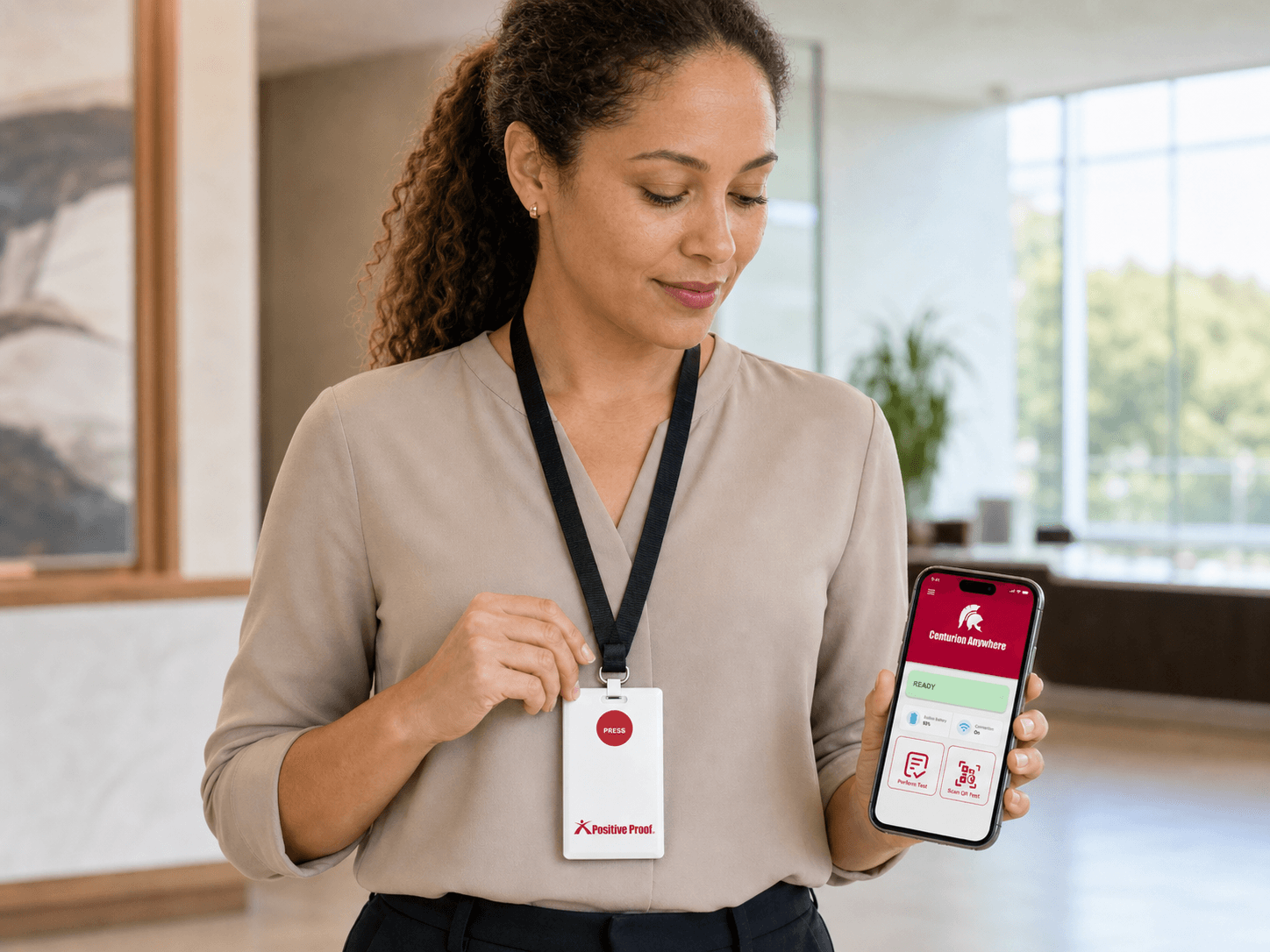
Panic Buttons
Wearable silent alert — silent one-press activation, GPS location to dispatch
Explore Panic ButtonsEvery solo showing is a lone worker situation. Positive Proof delivers wearable panic buttons that real estate agents can activate silently during a showing — no phone, no app, and coverage in the rural and vacant properties where cellular-dependent systems fail.
Request a Demo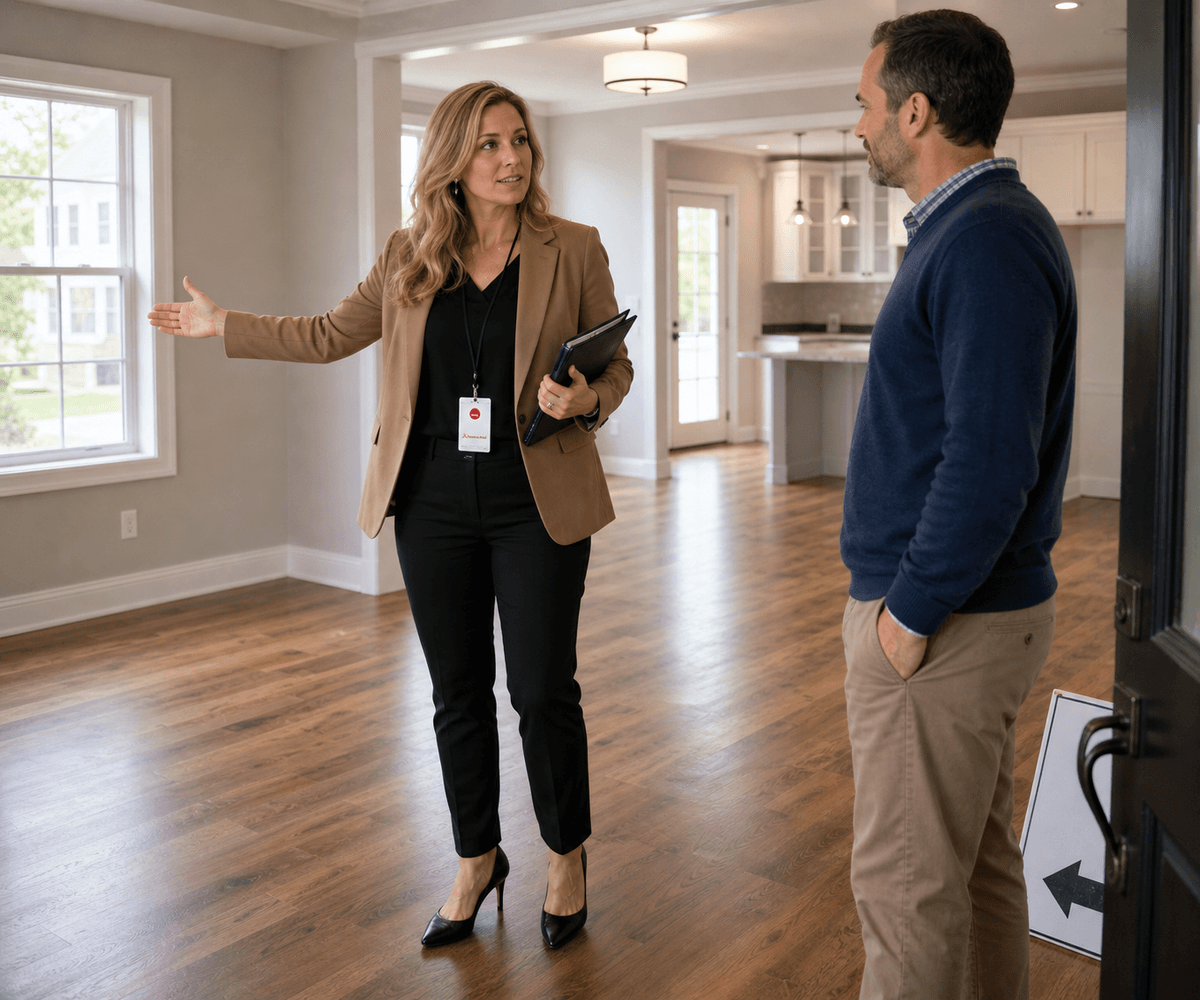
THE REAL ESTATE ENVIRONMENT
Real estate agents are lone workers by definition. Every solo showing and open house puts an agent alone in a property — often vacant, sometimes remote — with a prospect they may have met only once. NAR survey data consistently finds that more than 80 percent of agents have experienced a situation in a client interaction that made them fear for their personal safety. Female agents are disproportionately targeted. The threat is not hypothetical: agents are assaulted, robbed, and killed during showings every year. The industry has absorbed this risk as an occupational norm — but the legal and liability exposure for brokerages is growing.
Most brokerages have adopted Forewarn or a similar pre-showing screening tool. Forewarn runs criminal history, sex offender registry, and eviction checks on a prospect before the showing. That covers the pre-showing question: who is this person? It does not answer the during-showing question: what happens when something goes wrong inside the property? Forewarn and Positive Proof address different moments in the same risk scenario — they are complementary tools, not alternatives. Agents who use Forewarn have already decided the safety problem is real. A wearable panic button is the next layer of protection Forewarn does not provide. The "alternatives to Forewarn" search captures exactly these buyers: agents who understand the risk and are ready to close the gap.
The technical requirements for real estate safety are specific. Reaching for a phone during a confrontation in an empty house signals alarm to the threat and can escalate the situation. A wearable badge activates silently with a single press — no visible movement, no unlocking a screen, no opening an app. The badge pairs by Bluetooth to a phone running the Positive Proof Panic Button app, which transports the alert by cellular with the agent's GPS location. For showings in rural lots, vacant commercial buildings, and other known cellular dead zones, brokerages supplement the device with pre-showing check-in protocols — no panic button on the market operates without some form of carrier signal in those environments. No regulatory mandate requires brokerages to provide panic buttons to agents — but the OSHA General Duty Clause and brokerage duty of care establish liability when recognized hazards are not mitigated, and the NAR data makes this a recognized hazard by any standard.
80%+ of real estate agents have experienced a client interaction that made them fear for their personal safety — NAR survey data the industry has normalized as occupational risk
No state or federal mandate requires brokerage panic buttons — but OSHA's General Duty Clause and brokerage duty of care create liability when recognized hazards are documented and no mitigation exists
Forewarn screens prospects before a showing — Positive Proof protects agents during the showing, covering the safety gap Forewarn was never designed to close
WHAT'S AT STAKE
Each scenario reflects documented patterns in agent safety incidents — and represents direct exposure to harm, brokerage liability, or agent turnover.
POSITIVE PROOF FOR REAL ESTATE
Positive Proof covers the showing safety gap that background check tools leave — from the moment the agent enters the property to the moment they leave.
Four outcome areas that matter most to managing brokers, office managers, and agents evaluating showing safety systems.
2 Sec
Alert-to-Responder Time
25+
Years in Security
96–98%
Agents Report Feeling Safer After Deployment
A 30-minute demo is configured to your brokerage size, showing types, and current safety protocol.
Request a DemoWhat managing brokers, office managers, and agents ask before evaluating showing safety systems.
One wearable device closes the safety gap Forewarn and app-based systems leave open.
Request a Demo