Home → Industries → Public Venues & Events

Panic Button for Venues — Staff Safety and Event Security for Stadiums, Arenas, and Concert Halls

A sellout event fills 40,000 seats and saturates every cellular tower within a mile. Standard panic button systems that depend on LTE, 4G, or 5G fail precisely when a venue is most crowded — and most vulnerable. Positive Proof operates on a facility-deployed network that bypasses commercial cellular entirely, delivering 2-second alerts to security staff during peak capacity, in parking structures, back-of-house corridors, and outdoor event grounds where cellular dead zones exist year-round.

Request a Demo
Panic button for venues — Positive Proof event staff safety platform with gunshot detection and event coordination for stadiums, arenas, and concert halls

THE VENUE ENVIRONMENT

Every Sellout Event Saturates the Cellular Network Your Staff Safety System Runs On

During a capacity event, the commercial cellular networks surrounding a venue operate at 300 to 500 percent of normal load. Tens of thousands of attendees streaming video, posting to social media, and placing calls create a sustained demand spike that no carrier planned its tower capacity to absorb. Standard panic button systems that route alerts through LTE, 4G, or 5G experience delayed transmissions, failed connections, and silent system failures under these conditions — and the staff member who pressed the button has no way to know the alert never arrived. Positive Proof's facility-deployed network is a private network that operates entirely outside commercial cellular infrastructure. A sellout crowd does not affect it.

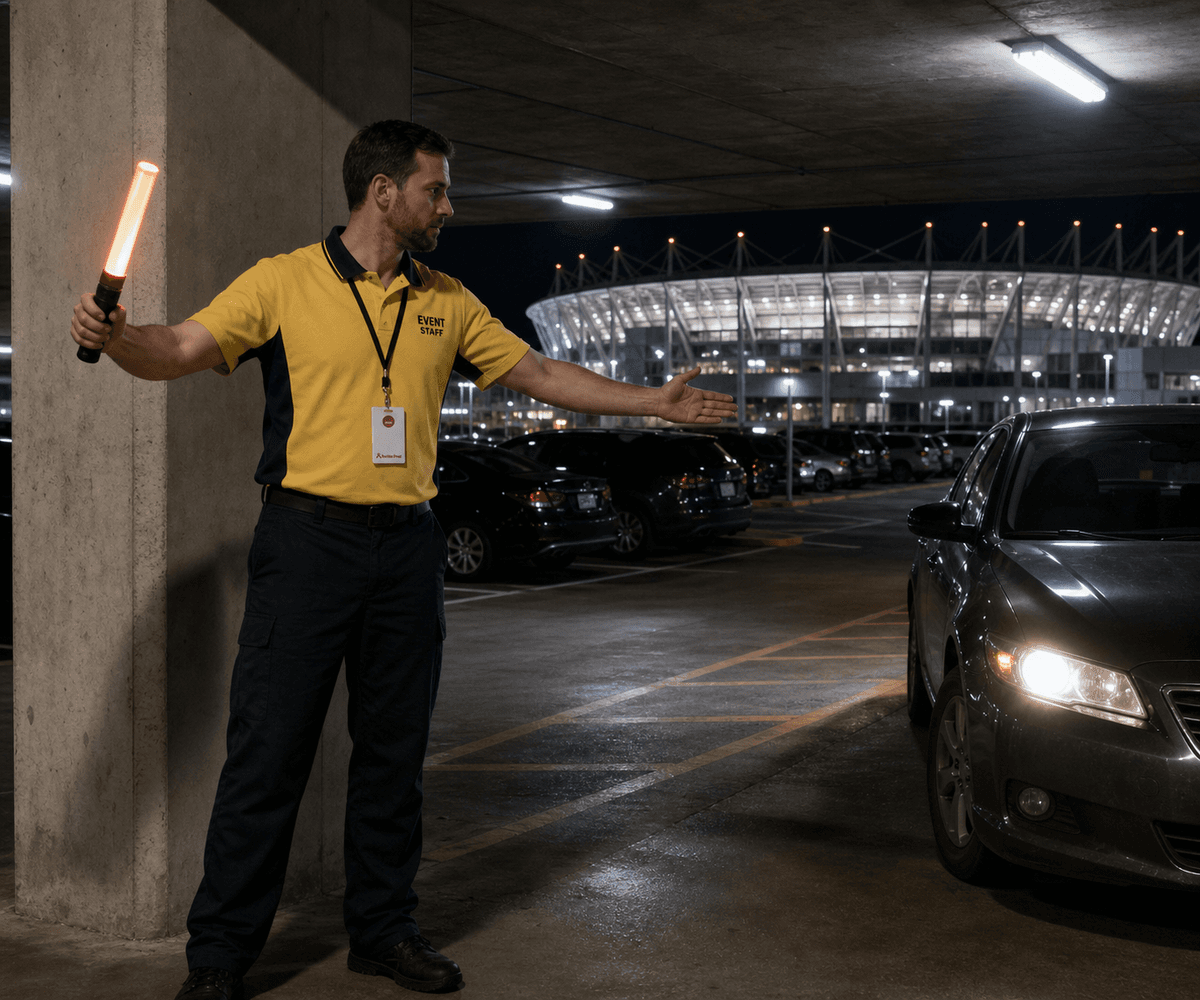
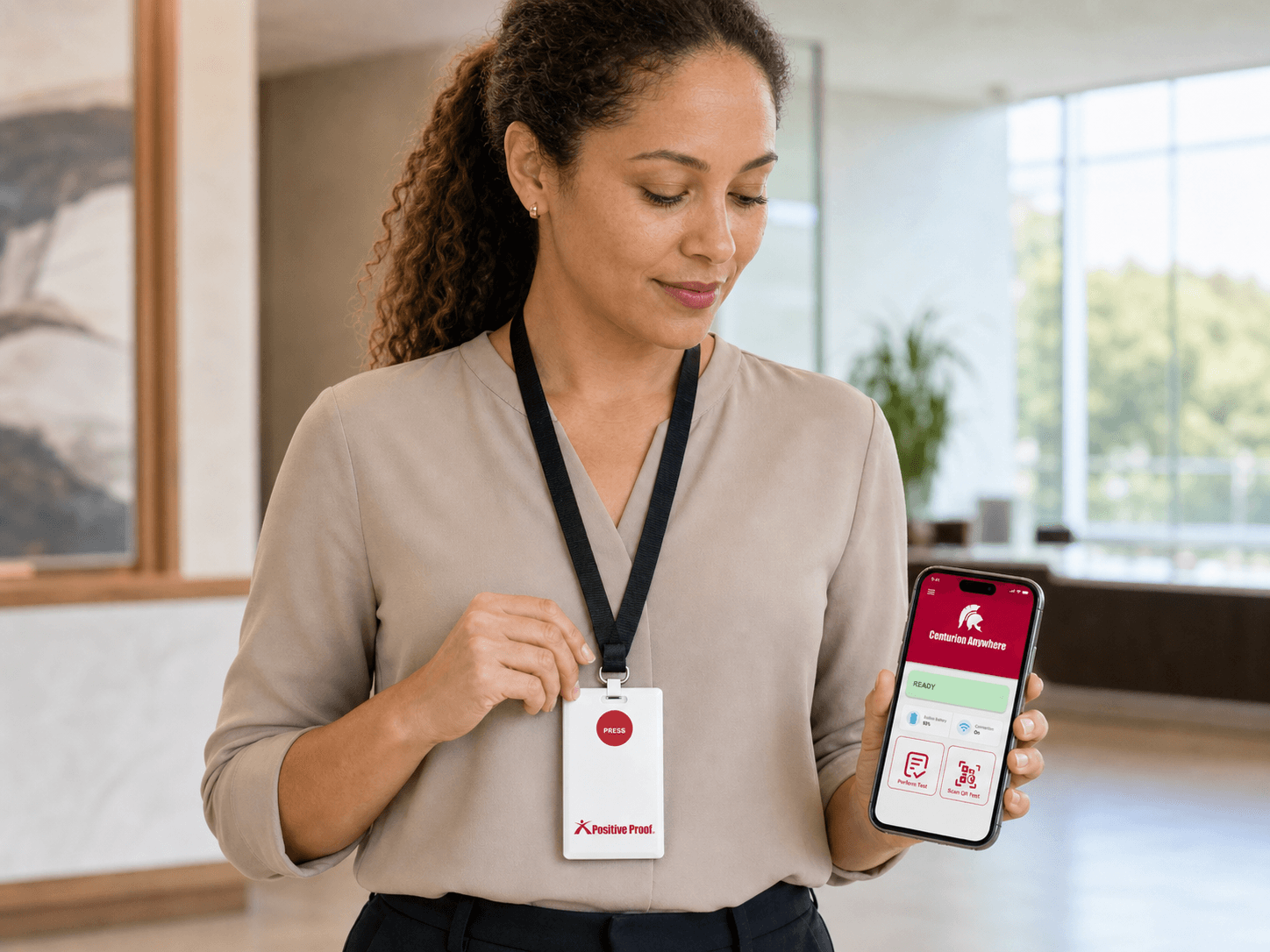
The physical layout of a venue creates additional coverage problems that no cellular or Wi-Fi solution fully solves. Parking structures, loading docks, back-of-house corridors, maintenance tunnels, and outdoor event grounds are the areas where venue staff face the highest assault exposure — and the areas where cellular signal is most unreliable year-round, regardless of event capacity. Parking attendants and loading dock staff work alone for extended periods, often during load-in and load-out when security coverage is thinnest. App-based panic systems require a smartphone and reliable signal. Positive Proof's wearable badge device requires a single press, with no phone, no app, and no dependence on the cellular coverage that back-of-house areas never reliably have.

The regulatory environment for venue security is moving toward accountability without yet reaching mandate. CISA identifies stadiums, arenas, convention centers, and outdoor event venues as soft target and crowded place environments requiring layered real-time communication — and commercial venue underwriters at Lloyd's and AIG are incorporating staff safety technology into coverage assessments. Venues with documented staff safety incidents and no deployed system face premium adjustments at renewal. Venues with an active panic button system and a timestamped activation log are receiving premium reductions. For venue GMs and risk managers, that insurance math is increasingly the path to CFO approval — and the activation log Positive Proof generates automatically is the documentation carriers require.

Sellout events saturate commercial cellular networks at 300 to 500 percent capacity — standard LTE-dependent panic button systems experience failed transmissions exactly when a venue is most crowded and most at risk

Parking attendants, loading dock staff, and back-of-house workers face the highest patron assault exposure at venues — in the areas with the worst cellular and Wi-Fi coverage

CISA identifies stadiums, arenas, and event centers as soft target environments — and commercial insurers are beginning to require documented staff safety systems as a condition of coverage at renewal

WHAT'S AT STAKE

The Scenarios Venue Security Directors Work to Prevent

Each scenario represents a documented gap in current venue security infrastructure — and a direct line to preventable staff harm, post-incident liability, or operational disruption.

Sellout Night Alert Failure

A parking attendant in the outer lot activates her panic button after being confronted by an aggressive patron during a sold-out arena event. The system routes through LTE. The cellular tower is at 400 percent capacity. The alert times out. She waits 11 minutes before a security officer on rounds spots her.

Back-of-House Staff, No Device

A maintenance worker completing post-show facility work is alone in a lower-level loading corridor. He has no panic device — venue security protocols cover event staff but not facilities crew. An unknown individual who entered through the loading dock confronts him. He cannot reach his radio in time. The incident escalates before any alert reaches the security desk.

Outdoor Festival, No Signal

A three-day outdoor music festival deploys a cellular-dependent staff safety system. On the afternoon of Day 2, network saturation in the festival footprint disables the system for approximately four hours. Staff who activate the panic app receive error messages. No incident occurs — but the security director has no way to know this until after the festival ends.

Gunshot Detection Disabled After False Alarms

A concert venue deploys acoustic gunshot detection. During a rock show with pyrotechnic effects, the system triggers on the pyrotechnic discharge. An evacuation alert goes out. Approximately 8,000 patrons begin exiting. After the third false alarm in a single season, the venue operator disables the detection system entirely. The venue is now running with no acoustic detection layer.

Multi-Building Coordination Blind Spot

A security incident occurs in the east wing parking structure of a convention center complex. The security team in the main hall receives the panic alert but has no view of who else responded, whether a unit is en route, or the current status. Three officers converge on the same location. Two other areas of the complex are left unmonitored during the response.

POSITIVE PROOF FOR PUBLIC VENUES & EVENTS

Three Solutions Built for Venue Staff Safety and Event Security

One platform covers every layer of venue security — event coordination for your operations team, wearable panic buttons for isolated staff, and gunshot detection calibrated for live events.

What Positive Proof Delivers for Venues and Event Facilities

Four outcome areas that matter most to venue security directors, VPs of operations, and general managers managing staff safety and event risk.

Security Improvement

  • Wearable panic button — no phone, no app, 2-second alert to security team
  • Gunshot detection — acoustic identification calibrated for high-ambient-noise event environments
  • Silent activation — no visible action required during a patron confrontation
  • facility-deployed network — operates without cellular, Wi-Fi, or venue IT infrastructure

Campus & Event Coverage

  • Covers parking structures, loading docks, back-of-house corridors, and outdoor event grounds
  • Independent RF network bypasses commercial cellular congestion during sellout events
  • Proven across 25+ years of K-12 deployment — wearable badge device requires no smartphone, no app
  • Wire-free deployment — operational across multi-building venue campuses without new infrastructure

Incident Coordination

  • Location-tagged alerts route response to the correct zone — no all-hands pull from post
  • Unified coordinator dashboard — all active alerts, responder status, and zone history in one view
  • Event Management integration — safety coverage configured to event schedule and staffing
  • Concurrent incident tracking across multiple venue zones and buildings simultaneously

Reporting & Compliance

  • Automatic timestamped activation log for every device use — satisfies insurance carrier documentation
  • CISA soft target and crowded places guidance alignment documentation
  • Post-incident reporting exportable for law enforcement and internal review
  • Annual compliance framework for venue emergency action plan documentation

2 Sec

Alert-to-Responder Time

25+

Years in Security

96–98%

Staff Report Feeling Safer After Deployment

See How Positive Proof Covers Every Part of Your Venue Without Depending on Cellular

A 30-minute demo is configured to your venue layout, event schedule, and existing security infrastructure.

Request a Demo

Common Questions About Panic Buttons and Security for Venues and Arenas

What venue security directors, directors of operations, and general managers ask before evaluating a staff safety platform.

No federal law currently requires panic buttons specifically for venue staff. However, several frameworks create strong compliance pressure. The OSHA General Duty Clause requires employers to provide a workplace free from recognized hazards — for venues with documented histories of patron-on-staff assaults, the absence of a response system creates measurable exposure. State-level emergency action plan requirements in California, New York, Florida, and other states increasingly reference staff notification systems as required components of annual plans. The fastest-moving pressure is from insurance: Lloyd's, AIG, and other commercial venue underwriters are incorporating staff safety technology into risk assessments. Venues with assault incident histories and no deployed system face premium adjustments. Venues with active systems and activation logs are receiving premium reductions. For most venue GMs, the question is not whether a system becomes required — it is whether their venue deploys before or after an incident makes the decision for them.
Positive Proof's gunshot detection uses acoustic sensors calibrated to identify the specific signature of a gunshot — distinguishing it from crowd noise, amplified music, fireworks, and pyrotechnic effects. When a shot is detected, security staff receive an alert on their panic button devices and the operations coordinator receives a location-tagged notification within 2 seconds. The acoustic calibration accounts for high-ambient-noise environments: the system is configurable for event type — concert, sporting event, convention — so that scheduled pyrotechnics do not trigger false alerts. When a detection occurs, the alert includes location data so response is directed to the correct zone. For venue security directors whose previous experience with gunshot detection has included false positives at live events, the event-context configuration is the difference between a system that stays active and one that gets disabled after the third evacuation of the season.
Positive Proof operates on a facility-deployed network — completely separate from commercial cellular, public Wi-Fi, and venue IT infrastructure. When staff at a sellout event activate a panic button device, the alert routes through the facility-deployed network and reaches the security coordinator within 2 seconds, regardless of cellular congestion. During a capacity event, commercial cellular networks near a venue can operate at 300 to 500 percent normal load — standard LTE and 4G panic button systems experience alert delays, failed transmissions, and silent failures under these conditions. A staff member who presses her button and receives no confirmation has no way of knowing whether help is coming. The facility-deployed network is private that operates entirely independently of commercial cellular infrastructure. Event congestion, carrier outages, and network maintenance windows do not affect alert delivery.
CISA (Cybersecurity and Infrastructure Security Agency) publishes 'Countering Violent Extremism at Soft Targets and Crowded Places,' which specifically identifies mass gathering venues — stadiums, arenas, convention centers, and outdoor event venues — as soft target environments requiring layered security. CISA recommendations include real-time communication systems that allow staff to immediately alert security, layered detection capabilities covering perimeter and interior, trained staff with defined response protocols, and documented emergency action plans exercised annually. CISA also publishes the Soft Targets and Crowded Places resource library with venue-specific planning guides. For NFL, NBA, and NCAA Division I venues, league security playbooks increasingly reference gunshot detection and staff duress alert systems as required or recommended infrastructure. For venue security directors, CISA guidance carries weight in board presentations, insurance conversations, and RFP specifications — it is the authoritative external sourcing that moves capital expenditure decisions.
Large venue security coordination breaks down at two points: the initial alert and the follow-on response. When a panic button activates, the first challenge is routing that alert to the right responders — not a general broadcast that pulls all units from their posts. The second challenge is maintaining situational awareness across multiple zones, buildings, and security teams during an active response. Positive Proof addresses both. The platform delivers location-tagged alerts so the security coordinator sees not just that an alert was activated, but where — parking structure east, lower loading corridor, suite level B. The coordinator dashboard shows all active alerts, which responders are in motion, and the current status of each zone. For campus-style venues with multiple buildings, this unified view prevents the failure mode of all units converging on one location while other areas are left unmonitored. For venues running concurrent events in multiple spaces, the platform supports parallel incident tracking so a situation in one area does not blind the team to an unrelated alert elsewhere.
Insurance requirements for venue panic buttons are not yet universal, but the trajectory is clear. Commercial venue underwriters — including major carriers in the Lloyd's market and in AIG commercial lines — have begun incorporating staff safety technology into venue risk assessments at renewal. Venues with documented staff assault incidents and no deployed panic button system are being flagged for premium adjustment or coverage conditions. Some carriers are offering measurable premium reductions to venues that can demonstrate an active, deployed panic button system with activation logs. The documentation requirement matters: carriers want proof the system is in use, not just purchased. Positive Proof generates an automatic activation log for every device activation — this log is the documentation that satisfies carrier requirements. For venue GMs and risk managers, the insurance premium reduction is often the financial argument that moves a capital expenditure from the consideration list to the budget.

Ready to Protect Every Staff Member Across Every Corner of Your Venue?

One platform for staff panic alerts, gunshot detection, and event coordination — works without cellular during your biggest events.

Request a Demo