Home → Industries → Places of Worship

Panic Button for Churches — Active Shooter Response and House of Worship Security

No state or federal mandate requires security systems at houses of worship — but the DHS Nonprofit Security Grant Program provides up to $150,000 per year to 501(c)(3) faith communities, and 60 to 70 percent of eligible congregations have never applied. Positive Proof delivers panic buttons and gunshot detection on a facility-deployed network that requires no cellular, no Wi-Fi, and no internet connection — with volunteer coordination built in for the first 90 seconds that matter most.

Request a Demo

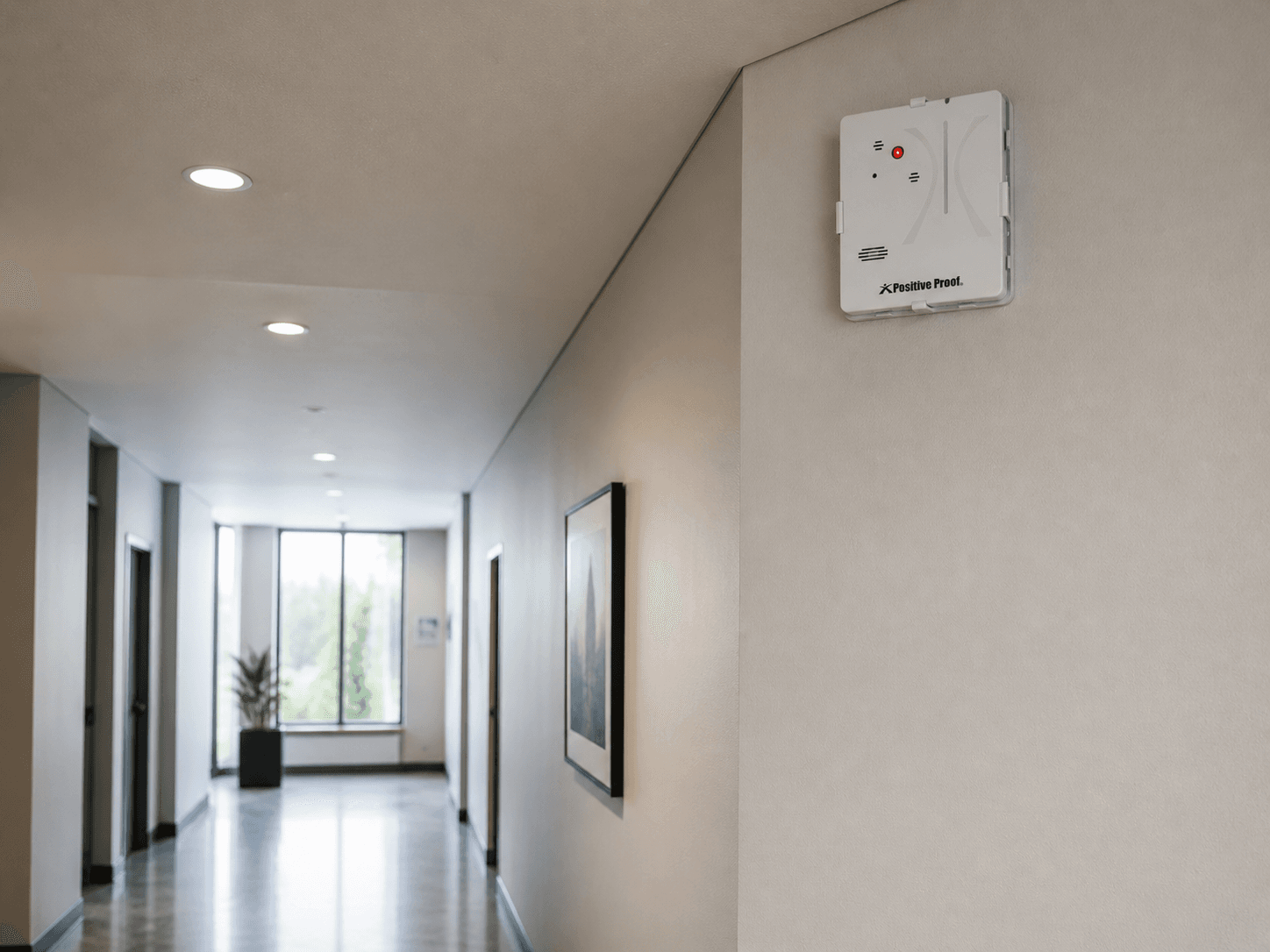
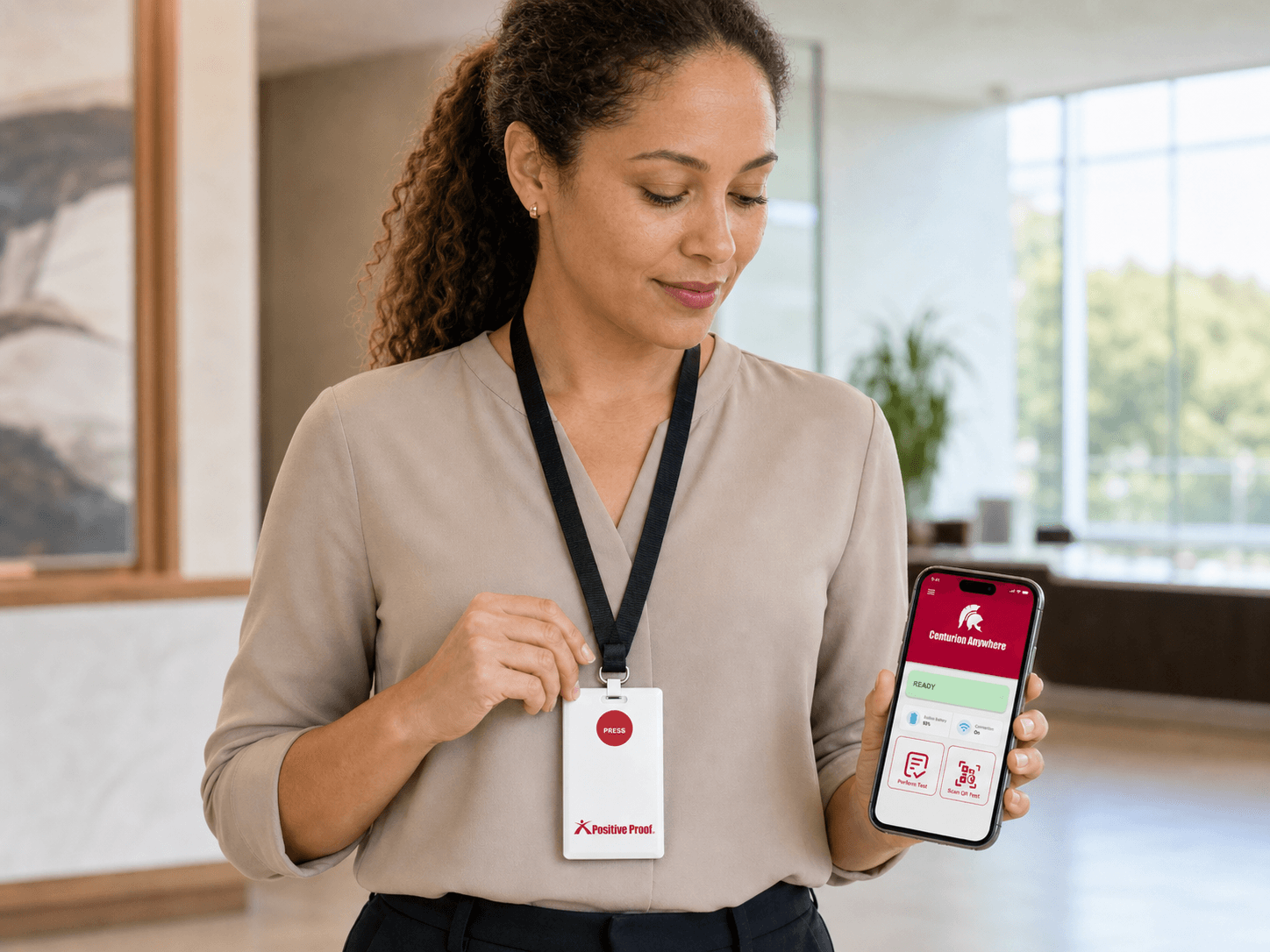
Panic button for churches — Positive Proof house of worship security platform with gunshot detection and volunteer coordination

THE HOUSE OF WORSHIP ENVIRONMENT

Your Open Door Is Your Greatest Strength — and Your Biggest Security Challenge

Houses of worship face a security challenge that no other facility type shares: a structural, theology-driven commitment to open access. Schools have controlled entry. Corporate facilities have security desks and badge systems. Houses of worship — by mission and tradition — do not. The open-door policy that defines a welcoming faith community is also the reason that standard access-control-based security solutions do not apply. There is no entry checkpoint. There is no barrier between a threat and a congregation. Welcoming AND prepared is not a contradiction — it is the responsible stewardship that a faith community owes the people in its care.

The DHS Nonprofit Security Grant Program (NSGP) is the primary funding mechanism for house of worship security — but an estimated 60 to 70 percent of eligible congregations have never applied, and 30 percent believe they do not qualify. Every 501(c)(3) faith community is eligible. Grant amounts range from $25,000 to $150,000 per organization per cycle, depending on the state. The program funds physical security improvements including panic buttons, gunshot detection systems, security cameras, access control, and security training. For a congregation that cannot budget $50,000 for a security platform, the NSGP is not a secondary consideration — it is the funded pathway that makes the decision possible.

The threat profile at houses of worship is distinct from every other industry. Unlike schools (known-perpetrator grievance) or workplaces (disgruntled employee), houses of worship face ideological and hate-crime threats from unknown attackers with no prior relationship to the congregation. This means insider-threat detection tools do not apply. Gunshot detection is not a paranoid add-on — it is the only detection layer that does not require access control and activates the moment a weapon is discharged. Volunteer coordination is not administrative software — it is the infrastructure that determines whether trained security volunteers can mount a unified response in the 90 seconds before law enforcement arrives.

Active shooter events average 5 to 12 minutes from first shot to law enforcement arrival — trained security volunteers are the actual first response, not professional security guards

Houses of worship face ideological and hate-crime threats from unknown attackers — access control and insider-threat tools do not apply; gunshot detection and volunteer coordination do

An estimated 60 to 70 percent of eligible houses of worship have never applied for NSGP grants — up to $150,000 per organization per cycle, covering panic buttons, gunshot detection, and training

WHAT'S AT STAKE

The Scenarios Church Security Directors Work to Prevent

Each scenario represents a documented gap in house of worship security infrastructure — and a direct line to preventable harm or a funded security upgrade that never happened.

Sunday Service Gunshot, No Detection

A gunman enters through the main entrance during a Sunday morning service with 400 people in the sanctuary. There is no gunshot detection. The security volunteer at the rear of the building does not hear the first shot over the worship music. The first alert to the security coordinator comes from a congregation member calling 911 — more than 90 seconds after the first shot was fired.

Security Volunteer Has No Device

A volunteer security team member at the entrance of a midweek prayer service encounters a threatening individual demanding entry. He reaches for his phone to call the security coordinator — the visible action escalates the confrontation. There is no wearable panic device. The individual forces entry before any alert reaches the back of the building.

NSGP Grant Cycle Missed

A church administrator learns about the DHS Nonprofit Security Grant Program in October — after the annual application window closed in March. The church had qualified for up to $75,000. The existing security plan would have met the application requirements. The grant cycle will not reopen for another six months. The security system upgrade is deferred again.

Evening Prayer Group, No Coverage

A Wednesday evening small group meets in a fellowship hall with eight people. The church does not station security volunteers for events under 50 attendees. An individual who was banned from the property six months earlier enters through an unlocked rear door. No one in the room has a panic device. The incident is not reported until the group leader calls the pastor 20 minutes later.

Scattered Response, No Coordination

Three security volunteers respond to an active threat simultaneously — but none knows where the others are or who has reached the affected area. Two converge on the same entrance. A third is standing by at the exit with no direction. There is no shared dashboard, no real-time volunteer status, and no coordinator view. The security director calls each volunteer individually while trying to reach 911.

POSITIVE PROOF FOR PLACES OF WORSHIP

Three Solutions Built for Congregation Safety and Active Shooter Response

One platform covers every layer of house of worship security — wearable panic buttons for security volunteers, acoustic gunshot detection that requires no access control, and real-time volunteer coordination.

What Positive Proof Delivers for Houses of Worship

Four outcome areas that matter most to senior pastors, security directors, and volunteer security teams evaluating an active shooter response platform.

Security Improvement

  • Wearable panic button — no phone, no app, 2-second alert to security team
  • Gunshot detection — acoustic identification in under 2 seconds from discharge
  • Silent activation — no visible action required during an active threat
  • facility-deployed network — operates without cellular, Wi-Fi, or internet connection

Congregation Coverage

  • Covers every area of the facility — sanctuary, fellowship hall, parking lot, nursery
  • Volunteer coordination dashboard shows who responded and where in real time
  • Works in thick masonry construction and older church buildings with no signal
  • Wire-free deployment — no disruption to existing building infrastructure

Grant & Funding

  • NSGP-eligible platform — panic buttons and gunshot detection qualify as funded measures
  • Grant application support — documentation of security improvements for NSGP submission
  • CISA Protective Measures for Faith-Based Facilities alignment
  • Insurance carrier documentation for written security plan requirements

Reporting & Visibility

  • Automatic timestamped alert log for every activation
  • Incident documentation for law enforcement cooperation and post-incident review
  • Volunteer response history for security team training and protocol review
  • NSGP grant monitoring evidence — demonstrates the system is operational and in use

2 Sec

Alert-to-Responder Time

25+

Years in Security

96–98%

Members Report Feeling Safer After Deployment

See How Positive Proof Protects Your Congregation and Qualifies for NSGP Funding

A 30-minute demo is configured to your facility size, service schedule, and volunteer security structure.

Request a Demo

Common Questions About Panic Buttons and Security for Churches and Houses of Worship

What pastors, security directors, and volunteer security team leads ask before evaluating a house of worship security platform.

Every 501(c)(3) nonprofit organization qualifies for the NSGP, including churches, synagogues, mosques, temples, and gurdwaras. The grant is administered by DHS through FEMA's Homeland Security Grant Program and is available to faith communities that can demonstrate they are at elevated risk of a terrorist attack — a threshold that houses of worship, as documented targets of hate-motivated violence, routinely meet. Grant amounts range from $25,000 to $150,000 per organization per cycle depending on the state. The application window opens annually, typically in late winter or early spring, and is managed at the state administrative agency level. An estimated 60 to 70 percent of eligible congregations have never applied. Many assume they don't qualify, that the process is too complex, or that the grant is reserved for larger organizations. None of these assumptions is accurate.
The NSGP covers a broad range of physical security enhancements. Funded measures include security personnel and guard services, security planning and risk assessments, physical security equipment such as panic buttons, gunshot detection systems, security cameras, access control systems, and perimeter barriers, and security training for staff and volunteers including active shooter response training. The grant also covers target hardening measures — fencing, lighting, bollards, and reinforced doors and windows — and communications equipment. For a house of worship deploying Positive Proof, the panic button system, gunshot detection devices, and volunteer coordination platform are all eligible NSGP expenditures. Each state administers its own NSGP allocation; application requirements vary but generally require a current security plan, a threat narrative documenting prior incidents or elevated risk, and documentation of the organization's 501(c)(3) status.
Positive Proof operates on a facility-deployed network — completely separate from internet, cellular, and Wi-Fi infrastructure. When a security volunteer, staff member, or usher activates a panic button device, the alert travels through the facility-deployed network and reaches the security coordinator or designated responder within 2 seconds. No internet connection is required. No cellular signal is required. No church Wi-Fi is required. This matters for houses of worship because many older buildings have thick masonry construction that blocks cellular signals, and many small and rural congregations have no reliable broadband on property. The facility-deployed network is self-contained — the only infrastructure required is the Positive Proof base unit installed at the facility. Congregations with no internet service, spotty cellular coverage, or RF-hostile construction are fully covered.
Positive Proof's gunshot detection uses acoustic sensors to identify the specific sound signature of a gunshot — distinguishing it from other loud sounds such as slamming doors, drums, or amplified music. When a shot is detected, security volunteers receive an alert on their panic button devices, the designated coordinator receives a location-tagged notification, and the response protocol is initiated automatically. Detection happens in under 2 seconds from the moment a shot is fired. This is critical in a house of worship for a specific reason: unlike schools or corporate facilities, churches have no access control barrier at the entry point. An armed attacker can enter without triggering any checkpoint. Gunshot detection is the first layer of detection that does not require access control — it activates the moment a weapon is discharged, before a security volunteer can visually identify the threat. For congregations with an open-door policy, acoustic detection is the only detection layer that functions without restricting who can enter.
For most houses of worship, a trained volunteer security team is both practical and effective. The NSGP grant funds security training for volunteers, and CISA publishes specific training resources for faith-based security teams. A volunteer security team that is trained, equipped with panic buttons, and coordinated through a real-time platform provides the same response capability as paid security in most threat scenarios — at a fraction of the cost. The key variables are: Are volunteers trained with a defined protocol? Are they equipped to activate an alert without reaching for a phone? Is there a real-time coordination tool so multiple volunteers can see who responded and where? Positive Proof addresses all three. Professional guards are appropriate for very large congregations, high-profile events, or facilities that have experienced prior incidents. For most congregations of 100 to 1,000 members, trained volunteer security with an integrated platform is the right model — and is exactly what the NSGP grant is designed to fund.
During an active shooter event, the first 60 to 90 seconds determine outcomes. Law enforcement response time averages 5 to 12 minutes from the first call — meaning the congregation's own trained security team is the actual first response. A panic button serves three functions in an active shooter scenario. First, it allows any trained volunteer to silently activate an alert without reaching for a phone, without verbal communication, and without any visible action that could escalate the threat. Second, it delivers that alert to every other security volunteer simultaneously — within 2 seconds — so the entire team is responding in parallel rather than waiting for a radio call or phone tree. Third, for facilities with gunshot detection integrated into the same platform, the acoustic alert and the manual panic activation appear on the same coordinator dashboard — giving the responding team a combined detection signal and a confirmed human activation within seconds of an incident beginning. The result is a coordinated response that begins before law enforcement is dispatched, not after.

Ready to Protect Your Congregation and Apply for an NSGP Grant?

One platform for active shooter response, gunshot detection, and volunteer coordination — NSGP grant-eligible.

Request a Demo