Panic Buttons
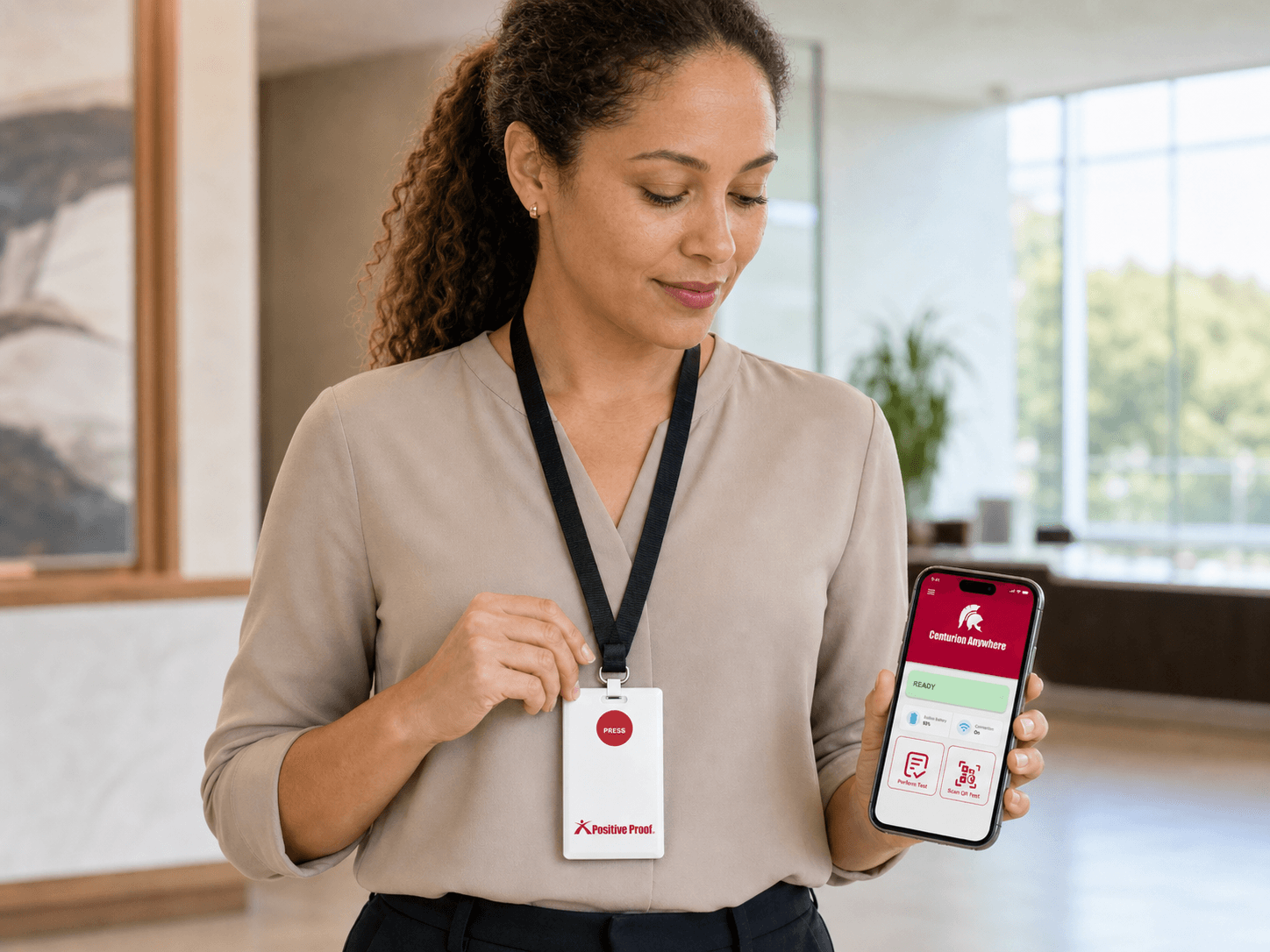
Wearable lone worker alert — one-press, plant-wide coverage, 2-second response
Explore Panic ButtonsManufacturing plants leave lone workers — in equipment rooms, loading docks, and multi-shift production areas — without reliable alerting when no colleague is nearby. Positive Proof delivers wearable panic buttons that work across your entire plant — including the metal-framed, sub-grade, and dead-zone areas where cellular- and app-based systems fail — reaching responders in 2 seconds on a facility-deployed network.
Request a Demo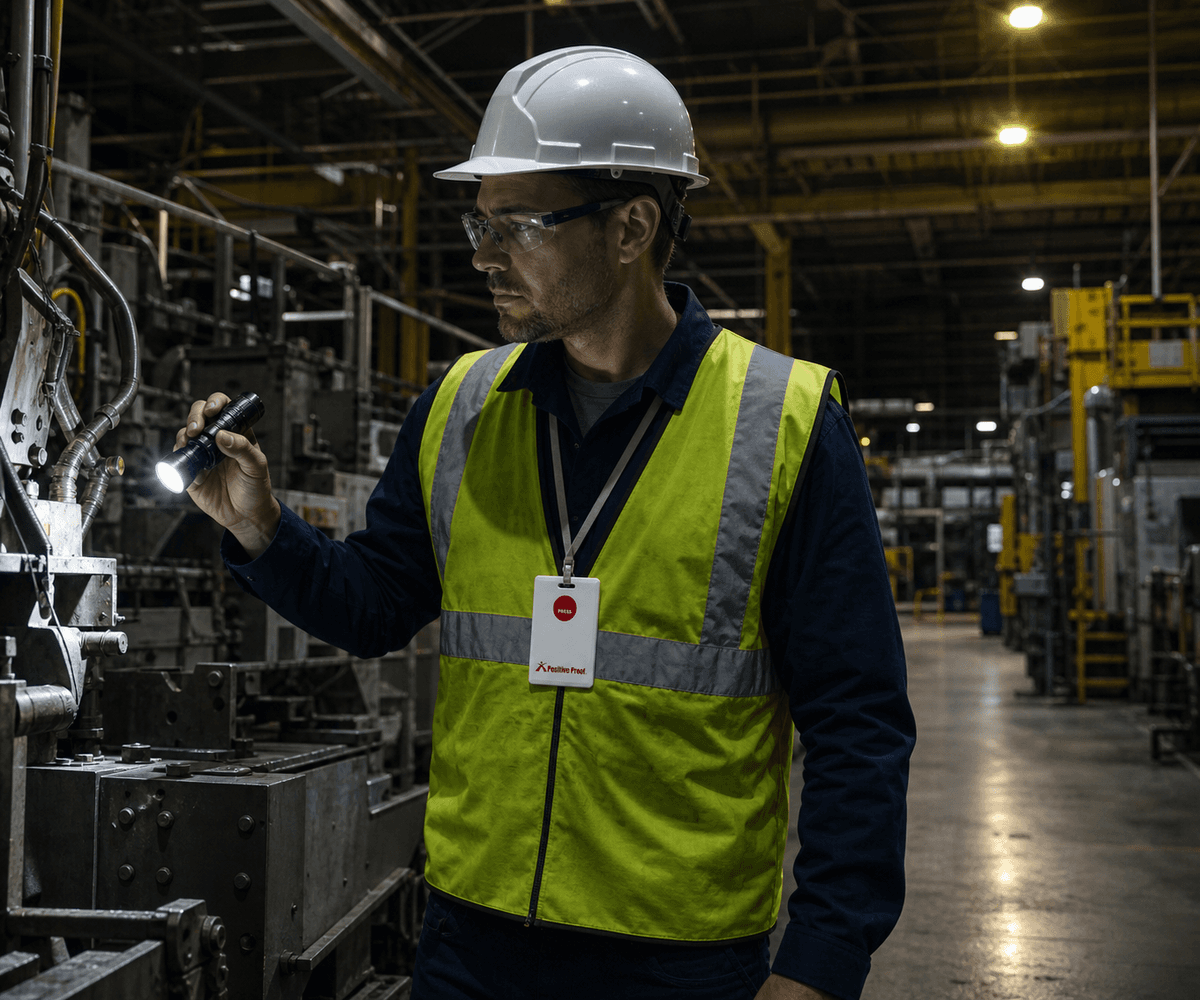
THE MANUFACTURING ENVIRONMENT
Production facilities routinely place workers alone in equipment rooms, loading docks, mechanical areas, and remote building sections where the nearest colleague may be several minutes away. Early-shift start-up operations, after-hours maintenance work, and multi-shift schedules create windows where a worker who suffers a fall, equipment incident, or threatening encounter has no reliable way to summon help. Most manufacturing safety programs were built around group operations — not the lone worker reality that fills the shift schedule every day.
The physical structure of manufacturing facilities compounds the problem. Large pre-engineered buildings with metal framing, steel equipment, and concrete floors create Faraday-cage environments that block cellular signals in exactly the areas where workers spend the most time. Enterprise lone worker systems from competitors like Blackline Safety and SoloProtect depend on cellular connectivity — a dependency that fails in large metal-framed plants. And any tool that relies on a worker's personal phone hits a second wall: many production-floor roles prohibit personal phones for safety. Positive Proof's facility-deployed network reaches into these structures and covers the production floor itself — staff press a worn device, and the facility infrastructure carries the alert, no personal phone needed on the floor.
The regulatory framework is real and tightening. OSHA's General Duty Clause (Section 5(a)(1)) requires every employer to protect workers from recognized hazards likely to cause death or serious physical harm — a lone worker with no alerting system is a recognized hazard. 29 CFR 1910.165 does not by itself require an alarm. It sets requirements for employee alarms installed to meet a particular OSHA standard.
Multi-shift schedules and early-start operations create daily lone worker windows in equipment rooms, loading docks, and remote building sections with no colleague nearby
The OSHA General Duty Clause requires employers to provide employment and a workplace free from recognized hazards that are causing or likely to cause death or serious physical harm to their employees
Metal framing, steel equipment, and concrete construction block cellular signals across the production floor — making cellular-dependent systems unreliable in exactly the areas workers need them most
WHAT'S AT STAKE
Each scenario is a documented gap in legacy manufacturing safety programs — and a direct line to OSHA exposure or preventable worker harm.
POSITIVE PROOF FOR MANUFACTURING
One platform covers every layer of manufacturing safety — wearable panic buttons that reach workers anywhere in the plant, real-time door monitoring across every access point, and OSHA compliance documentation built into the system.
Wearable lone worker alert — one-press, plant-wide coverage, 2-second response
Explore Panic Buttons
Real-time alerts for equipment rooms, loading docks, and restricted access points
Explore Door Monitoring
Compliance documentation framework for lone worker programs under the General Duty Clause
View Compliance GuideFour outcome areas that matter most to EHS managers, safety directors, and facilities managers in manufacturing environments.
2 Sec
Alert-to-Responder Time
25+
Years in Security
96–98%
Staff Report Feeling Safer After Deployment
A 30-minute demo is configured to your plant layout, building construction, and existing safety infrastructure.
Request a DemoWhat EHS managers, safety directors, and facilities managers ask before evaluating lone worker alerting systems.
One platform for wearable staff alerts, door monitoring, and OSHA lone worker compliance documentation.
Request a Demo