HOME HEALTH AND HOSPICE
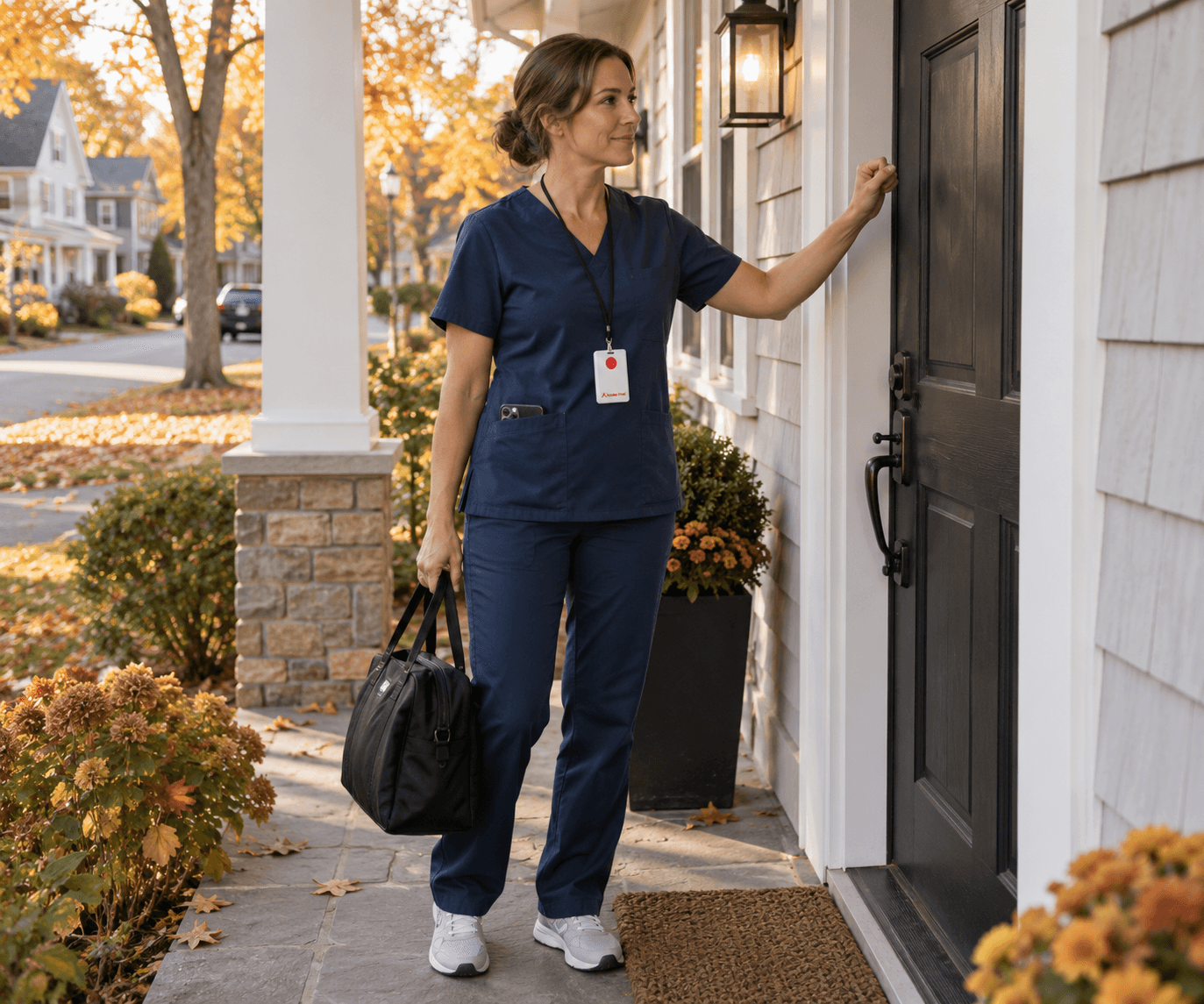
A panic button for home health nurses and hospice clinicians who visit homes alone
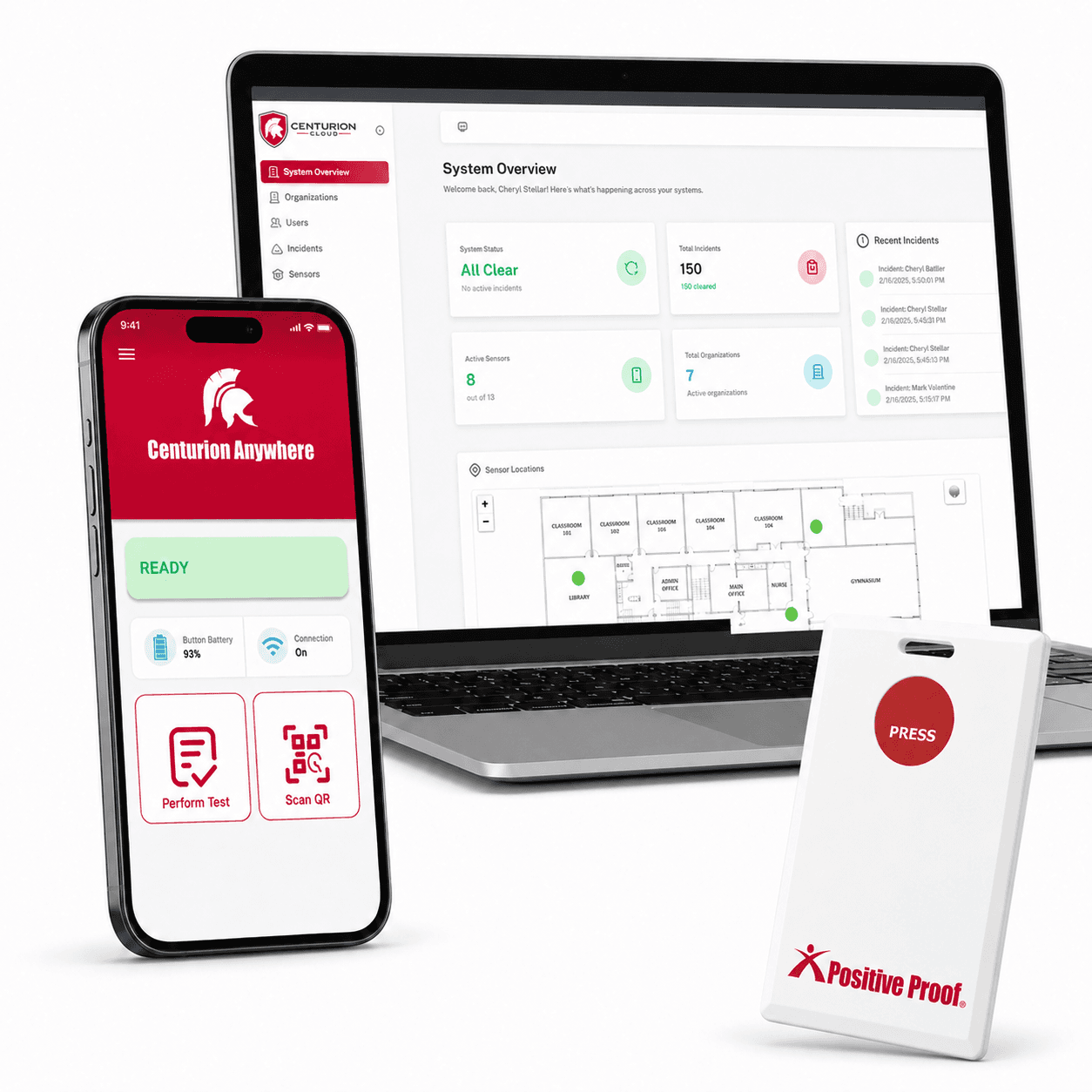
Positive Proof's panic button for home health nurses is a small badge that relies on Bluetooth to the phone they already carry. Press and hold it, and their GPS location goes by text and email to the supervisors you choose. Nothing is installed at your office or in clients' homes.
Or write to info@positive-proof.com
HOW AN ALERT TRAVELS
How the panic button for home health nurses works
Press and hold. Press and hold the badge button for two to three seconds.
The badge tells the phone. The badge is paired with the clinician's phone over Bluetooth.
The phone sends the alert. The phone sends it over its cellular or Wi-Fi connection.
Your people are told. The supervisors you choose receive a text and an email with the clinician's GPS location. During the alert, a link opens a live map that shows where the clinician is and the path they have moved. The online dashboard keeps the incident data for playback and download.
ON THE ROAD
Built for home visits
The phone can stay in a pocket or a bag. The alert starts when the clinician presses and holds the badge, not by unlocking a screen.
Administrators can see each badge's battery status in the dashboard.
BEFORE YOU START
What your agency provides
- A phone for each clinician. A compatible iPhone or Android phone, personal or agency-issued, carried within Bluetooth range of the badge. On agency-managed phones, check with your IT team that your device-management policy allows the app, Bluetooth and background operation.
- Location set to Always. The app needs location access set to Always, and permission to run in the background, so it can report location when the badge is pressed.
- A connection where visits happen. Cellular or Wi-Fi at the homes your staff visit. If some routes have known dead zones, tell us before setup.
- Named people and your procedure. The supervisors who receive alerts, and your agency's procedure for what they do next.
GETTING STARTED
How setup works
Badges are shipped to your team. Each clinician installs the app, allows the permissions it asks for and pairs their own badge. Then the manufacturer's support team completes the button setup. A badge is ready only after its test succeeds and the app shows the button is Ready for use.
WHAT IT DOES NOT DO
The limits, stated plainly
- No paired phone, no alert. The phone has to be on, nearby, with Bluetooth on and the app running.
- It needs a connection. The phone sends the alert over cellular or Wi-Fi.
- Location is the phone's GPS estimate. Inside a home it is an estimate, not a room.
- The system delivers the alert. What happens next is your agency's procedure.
CONNECTICUT
What Connecticut asks of home health and hospice agencies
The home care safety duties in Connecticut's Public Act 24-19 took effect on October 1, 2024. Public Act 25-168 amended it, effective October 1, 2025. As amended, the law requires home health care and home health aide agencies to:
- during intake, collect safety information about a new client and the location where staff will provide services, and share it with the staff assigned to that client, to the extent feasible and consistent with state and federal law
- adopt and implement a health and safety training curriculum consistent with the one endorsed by NIOSH and OSHA, and train staff on it every year
- establish a system by which staff may promptly report violence or a potential threat of violence, in conjunction with monthly safety assessments with direct care staff
- report every year each instance of abuse against a staff member relating to their employment, by a client or any other person, including verbal abuse perceived as a threat or danger, and what the agency did to keep that staff member safe
Hospice agencies now carry these duties too, including the annual report of abuse against staff. The intake duty does not apply to an agency licensed as a hospice organization or one that operates solely as a hospice agency.
None of these duties requires a panic button. A button can be one measure in your agency's safety plan. It does not make an agency compliant by itself.
Connecticut law and funding information on this page was last reviewed on October 10, 2026.
QUESTIONS
Questions agencies ask
Do nurses need a device, or is a phone app enough?
With an app alone, a nurse has to take out the phone and use the screen. With the badge, pressing and holding the button starts the alert while the phone stays out of sight. The badge still needs the phone nearby, because the phone sends the alert.
When a clinician needs help during a home visit, what happens next?
The supervisors your agency chose receive a text and an email with the clinician's GPS location, and a link to a live map during the alert. What they do next follows your agency's own safety procedure.
Can clinicians use agency-issued phones?
Yes, if the phone is a compatible iPhone or Android phone and your device-management policy allows the app, Bluetooth, background operation and location set to Always. Check this with your IT team before setup.
What if there is no cell signal at the home?
The phone needs a cellular or Wi-Fi connection to send the alert. If your staff visit areas with known dead zones, tell us which ones before you decide.
Does the app track our staff?
The app needs location access set to Always so it can report location when the badge is pressed. During an alert, the people you chose see a live map. If what the app records outside an alert matters to your agency or your staff, raise it with us before you decide.
Do all staff have to wear a badge?
No. Your agency decides who carries a badge.
Does a panic button make our agency compliant with Connecticut law?
No device makes an agency compliant by itself. The Connecticut home care safety duties described on this page do not require a panic button. A button can be one measure in your agency's safety plan.
Is state funding available for these devices?
The Connecticut DSS In-Home Safety Enhancement funding was one-time, and its activities had to be completed by June 30, 2025. At the time of writing, our review of the DSS program found no open funding round for these devices.
What does it cost?
Pricing depends on your team and is discussed directly. It is not published on this page.
Discuss your team's needs
Tell us how your clinicians work and what your agency would need. Write to us at info@positive-proof.com.
Or write to info@positive-proof.com
Safety for a hospital or clinic campus: healthcare facility safety